Background
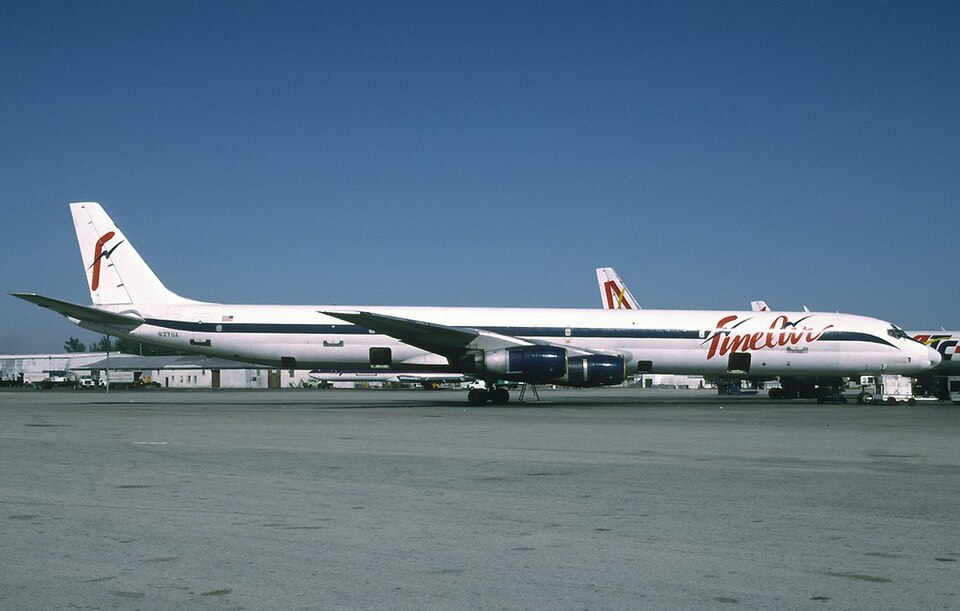
Fine Air Flight 101 was a scheduled cargo flight from Miami International Airport to Santo Domingo. The flight was originally planned with a DC-8 aircraft registered as N30UA, scheduled to depart at 09:15. Due to a delay, the aircraft was substituted with N27UA, and the departure was rescheduled to 12:00. N27UA arrived from San Juan at 09:31 and was parked at the Fine Air hangar ramp.
Sequence of Events
The security guard responsible for supervising the loading was not informed of the aircraft change and instructed Aeromar loaders to use a weight distribution form intended for N30UA. Cargo loading began at 10:30 and was completed by 12:06. This resulted in the center of gravity (CG) of the accident airplane being near or even aft of its aft CG limit. After the three crew members and the security guard boarded, the cabin door was closed at 12:22. Eleven minutes later, the flight obtained taxi clearance for runway 27R. At 12:34, the Miami tower controller cleared Flight 101 for takeoff.
Takeoff power was selected, and the DC-8 moved down the runway. The flightcrew performed an elevator check at 80 knots. Fourteen seconds later, the sound of a thump was heard. Just after calling V1, a second thump was heard. Two seconds later, the airplane rotated. Immediately after takeoff, the airplane pitched nose-up and entered a stall. The DC-8 recovered briefly from the stall and then stalled again. The airplane impacted terrain in a tail-first, right-wing-down attitude. It slid west across 72nd Avenue and into the International Airport Center at 28th Street, where it burst into flames.
Investigation and Findings
The investigation revealed that the misloading resulted in a CG that caused the airplane's trim to be mis-set by at least 1.5 units airplane nose-up. This presented the flightcrew with a pitch control problem on takeoff, precipitating an extreme pitch-up at rotation.
Probable Cause
The probable cause of the accident was: 1) The failure of Fine Air to exercise operational control over the cargo loading process; and 2) The failure of Aeromar to load the airplane as specified by Fine Air. Contributing to the accident was the failure of the FAA to adequately monitor Fine Air's operational control responsibilities for cargo loading and the failure of the FAA to ensure that known cargo-related deficiencies were corrected at Fine Air.