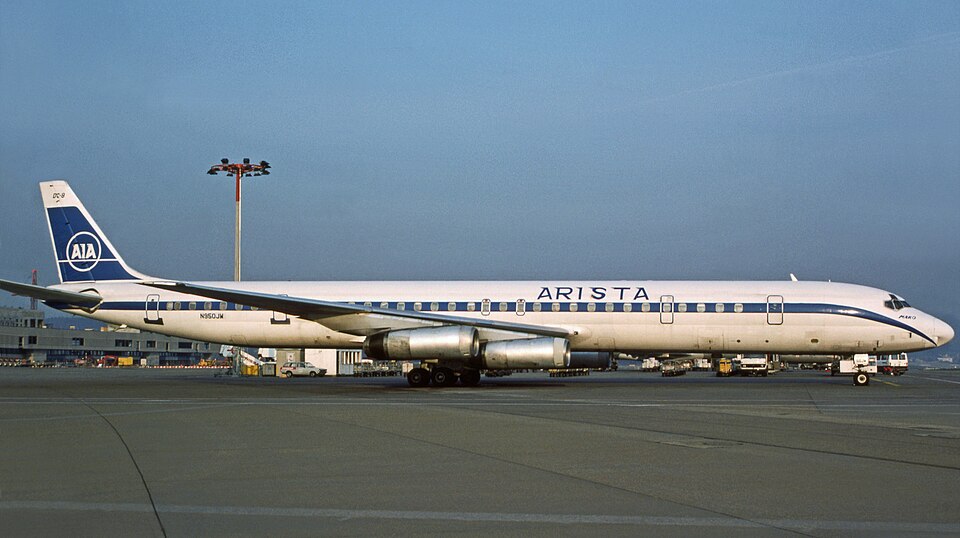
Accident Overview
On 11 December 1985, Arrow Air Flight MF1285R, a Douglas DC-8-63 with U.S. registration N950JW, crashed after departing from Gander International Airport, Newfoundland, Canada. The aircraft was destroyed by impact and a severe post-crash fire, resulting in fatal injuries to all 256 occupants.
Flight History
The flight originated in Cairo, Egypt, as an international charter transporting 248 soldiers of the 101st Airborne Division and 8 crew members to Fort Campbell, Kentucky, via Cologne, Germany, and Gander. The aircraft departed Cairo at 2035 GMT and arrived in Cologne at 0121 the next day for a crew change. It departed Cologne at 0250 and arrived in Gander at 0904. During the Gander stop, passengers deplaned, the aircraft was refueled, trash and waste water were removed, and catering supplies were boarded. The flight engineer conducted an external inspection. Passengers then reboarded for the final leg.
Departure from Gander
After engine start, the aircraft taxied via taxiway "D" and runway 13 to runway 22 for departure. Takeoff from runway 22 began at the intersection with runway 13 at 1015 local time. The aircraft rotated in the vicinity of taxiway "A".
Witness Accounts
Multiple witnesses observed the takeoff. Reports indicated that after rotation, the aircraft gained little altitude and began to descend. Witnesses on the Trans-Canada Highway, about 900 feet beyond the departure end of runway 22, saw the aircraft cross the highway at a very low altitude, with the highway at a lower elevation than the runway. Three witnesses described a yellow/orange glow emanating from the aircraft; two stated it was bright enough to illuminate the interior of their truck cabs, while the third attributed the glow to reflection of runway approach lighting. Several witnesses observed a right bank and an increasing pitch angle as the aircraft continued descending until it struck downsloping terrain approximately 3,000 feet beyond the departure end of the runway.
Probable Cause
The Canadian Aviation Safety Board (CASB) was unable to determine the exact sequence of events. However, the Board concluded that the weight of evidence supported the finding that shortly after lift-off, the aircraft experienced an increase in drag and reduction in lift, resulting in a stall at low altitude from which recovery was not possible. The most probable cause of the stall was determined to be ice contamination on the leading edge and upper surface of the wing. Other possible factors that may have compounded the effects included a loss of thrust from the number four engine and inappropriate takeoff reference speeds.