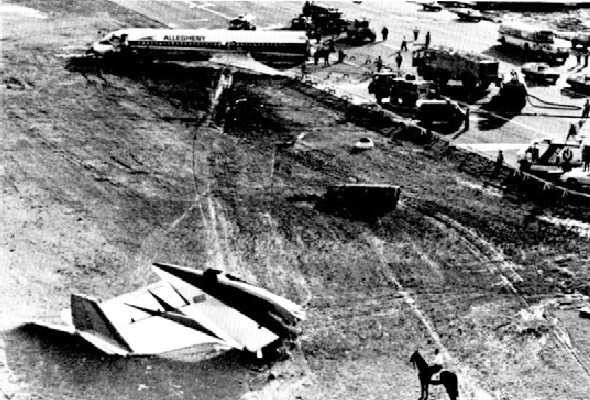
Accident Details
On approach to runway 27R at Philadelphia International Airport, the captain of Allegheny Airlines Flight 121 conducted an instrument approach in visual conditions while a thunderstorm passed over the airport from the north-northeast. Near the threshold, the captain initiated a go-around from a low altitude and entered rain of increasing intensity. Shortly thereafter, the aircraft was seen descending in a nose-up attitude with the landing gear retracted. The aircraft struck tail-first on a taxiway approximately 4,000 feet beyond the runway 27 threshold, then slid about 2,000 feet before stopping. The wreckage came to rest about 6,000 feet beyond the threshold and approximately 350 feet to the right of runway 27R's centerline.
Occupants and Injuries
There were 106 persons onboard the aircraft. Of these, 86 sustained injuries; there were no fatalities.
Probable Cause (Official Findings)
The accident was caused by the aircraft's encounter with severe horizontal and vertical wind shears near the ground as a result of the captain's continued approach into a clearly marginal severe weather condition. The aircraft's ability to cope under these conditions was borderline when flown according to standard operating procedures; however, if the aircraft's full aerodynamic and power capability had been used, the wind shear could probably have been flown through successfully. Contributing to the accident was the tower controller's failure to provide timely below-minimum RVR information.