Flight Events
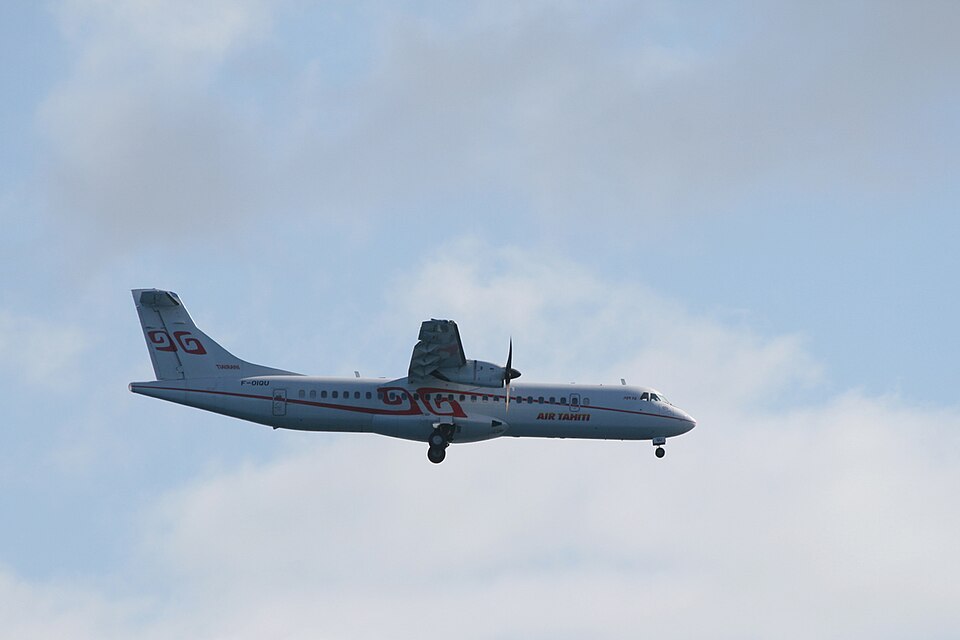
On 25 June 2011 at 17:12, an ATR 72-212A registered F-OIQU, operated by Air Tahiti, was in initial climb after takeoff from Papeete (French Polynesia) on an international scheduled passenger flight. The captain (pilot flying) observed that the ball of the turn indicator was full right at a speed of approximately 170 kt. He applied full rudder trim to reduce pedal forces, managing to bring the ball halfway between the center and the right stop. Suspecting an instrument malfunction, he asked the first officer (pilot not flying) to verify on the right-side indicator, who confirmed the same slip indication. Concerned about the inability to compensate for an engine 1 failure, the crew interrupted the flight and landed back at the departure airport. During final approach speed reduction, the slip decreased. The crew landed without further issues.
Maintenance Findings
Post-incident maintenance revealed that the rudder trim actuator control rod was not connected. The aircraft had undergone a maintenance visit from 30 May to 24 June 2011. On 10 June, inspection of the rudder torque tube showed corrosion between its upper (within the rudder) and lower (in the tail cone) parts. On 20 June, the team leader assigned the additional task to technician A, a line mechanic not part of the visit team. The work card (Job Instruction Card 27-21-45-RAI-10000-001) included four parts: removal/installation of tail cone, removal/installation of rudder trim actuator, functional test of rudder control, and functional test of rudder trim tab control. Technician A performed the removal steps of parts 1 and 2, which included disconnecting the rudder trim tab control rod located in the rudder. The next step required moving to the tail cone to remove the lower torque tube. The controller in charge of the visit instructed technician A that only the lower torque tube needed removal. Technician A removed the lower torque tube and stopped. He logged the removal in the computer system but could not log the control rod disconnection because the system only allowed recording start and end of a task. He did not inform anyone about the disconnection. On 21 June, technician B reinstalled the lower torque tube after corrosion treatment. Technician B performed only the installation steps related to the lower torque tube; the task to reconnect the control rod was part of the upper torque tube installation and thus was not done. The technician who closed the access panels did not notice the disconnected rod. The controller did not inspect the rudder area because no work was supposed to have been performed on the upper torque tube. The post-maintenance control range check did not detect the anomaly because it relied on visual inspection of the trim actuator position indicator, not the actual trim tab position. The final part of the work card, functional test of rudder trim tab control, was not performed as no work was believed to have been done on the rudder trim.
Control Flight and Disposition
The aircraft returned to service on 24 June. During the control flight, a snag was recorded: "At high speeds, the ball is in the right sector even when trimming." Analysis dismissed a rudder trim chain failure because no known action was supposed to have been performed on that chain during maintenance. A similar issue on another aircraft in April 2011 was attributed to an aileron trim misalignment. The controller assumed the same cause and had aileron trim adjustments made. The aircraft was returned to service without a second control flight.
Conclusion
The incident was due to the incomplete execution and verification of a maintenance operation, resulting in the undetected omission of reconnecting the rudder trim tab. Two factors contributed: the limitation of the company's maintenance computer system (only allowing start/end logging) and the absence of signing off work cards for each task by maintenance personnel and the controller.