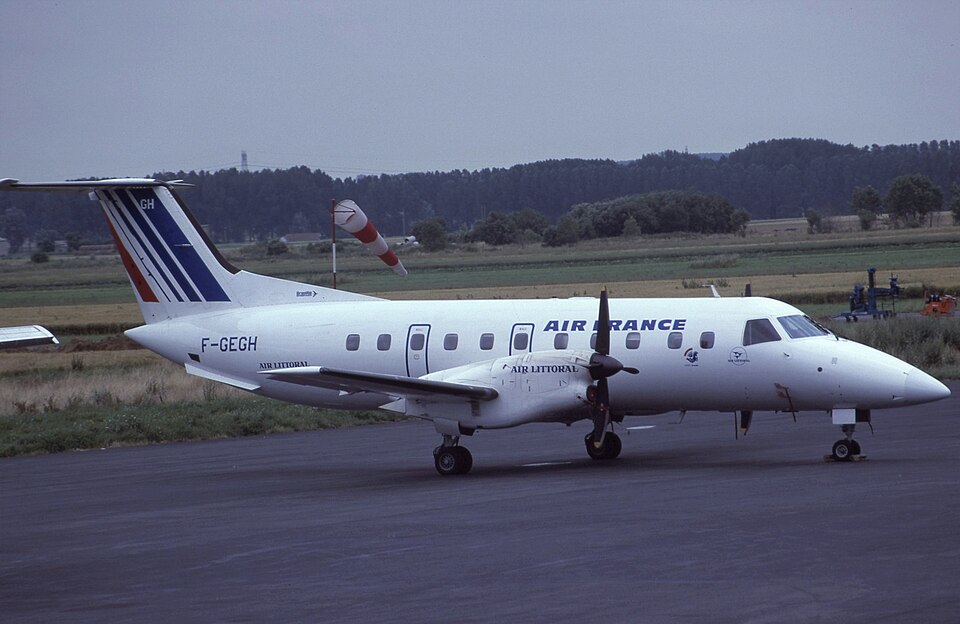
Approach and Weather Conditions
After an uneventful flight from Brussels, the crew of Flight 1919 contacted Bordeaux Approach at 15:01 and was vectored for an ILS approach to runway 23. Visibility was poor, with low clouds at 100 feet and a runway visual range (RVR) between 650 and 350 metres. The aircraft crossed the KERAG beacon, the initial approach fix (IAF), at an altitude of FL144 at 15:04:40.
Because the cloud base remained around 100 feet, the crew requested to enter a holding pattern south of the airport. Weather conditions slightly improved over the next few minutes, and Bordeaux Approach reported a cloud base at 160 feet. Flight 1919 had not yet reached the holding pattern, and the pilot decided to attempt to rejoin the ILS.
Descent and Approach Deviations
At 15:06:38, the flight was cleared direct to the BD beacon and to descend to 2000 feet. At the BD beacon, the flight was cleared for final approach and instructed to contact Bordeaux Tower. The aircraft had overshot the centerline and was slightly right on the glidepath. Bordeaux Tower then instructed the flight to report over the Outer Marker, which the captain acknowledged.
After crossing the Outer Marker, the aircraft was still not properly established on the ILS. The aircraft descended below the glideslope, and the crew hurriedly deployed flaps and landing gear. The captain did not contact Bordeaux Tower as requested; instead, he took over control of the aircraft, attempting to continue the approach. Both crew members had very little time to adapt to their new roles as the aircraft descended below the glide slope.
Final Descent and Crash
The descent continued until the aircraft struck tree tops and crashed in the Eysines forest, about 5 km short of the runway. The aircraft was totally destroyed, and all 16 occupants were killed.