Accident Overview
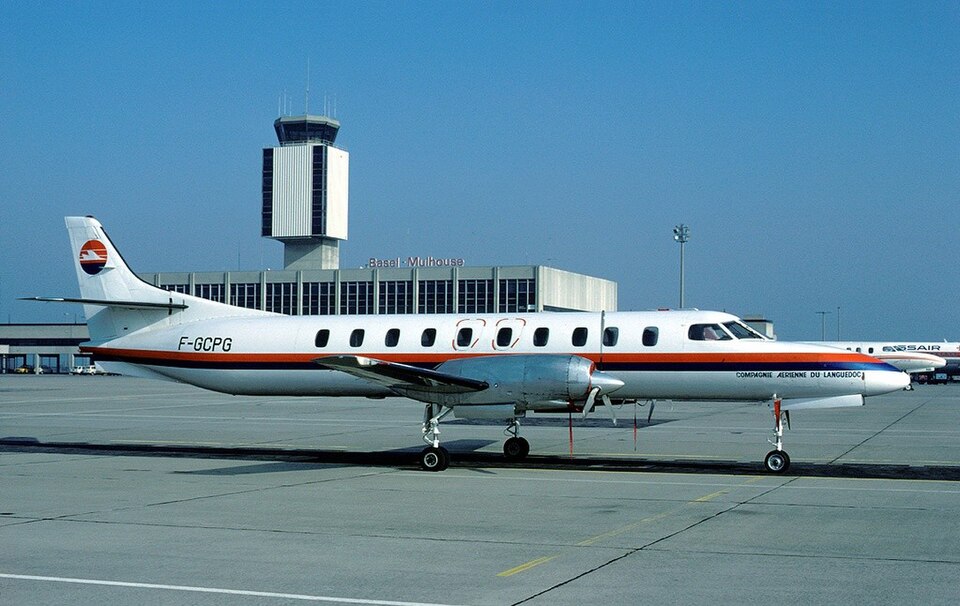
On a night takeoff from Montluçon-Guéret Airport, a Metro aircraft nosed down during initial climb. It struck the ground approximately 600 meters past the runway end, slid for several dozen meters, collided with bushes, and came to rest engulfed in flames. All four occupants—pilot Gérard Van Der Veecken, copilot Christian Rémondon, and passengers Robert Aupetit and Patrick Desdoit—were killed.
Flight Crew and Operation
The copilot was at the controls at the time of the accident. The flight was a night departure, with external visual references absent. The right horizon instrument was noted to be imprecise.
Stall Avoidance System
The Stall Avoidance System (SAS) had activated, resulting in the activation of the stick pusher at a critical altitude. The Metro's SAS system, as well as the specific system on this aircraft, had a history of problems, leading to several NTSB Safety Recommendations (A-84-66, A-88-154).
Investigation and Probable Cause
The official investigation determined that the accident resulted from a reduction in airplane attitude causing a downward trajectory moments after takeoff. It is likely that this decrease in attitude was due to an untimely triggering of the stick pusher. The absence of a flight data recorder and the complete destruction of the SAS (except for the angle of attack vane and its transmitter) prevented definitive proof of this hypothesis. Regardless of whether the stick pusher triggered inadvertently, the imprecision of the right horizon instrument and the absence of external visual references played an important role in the accident.