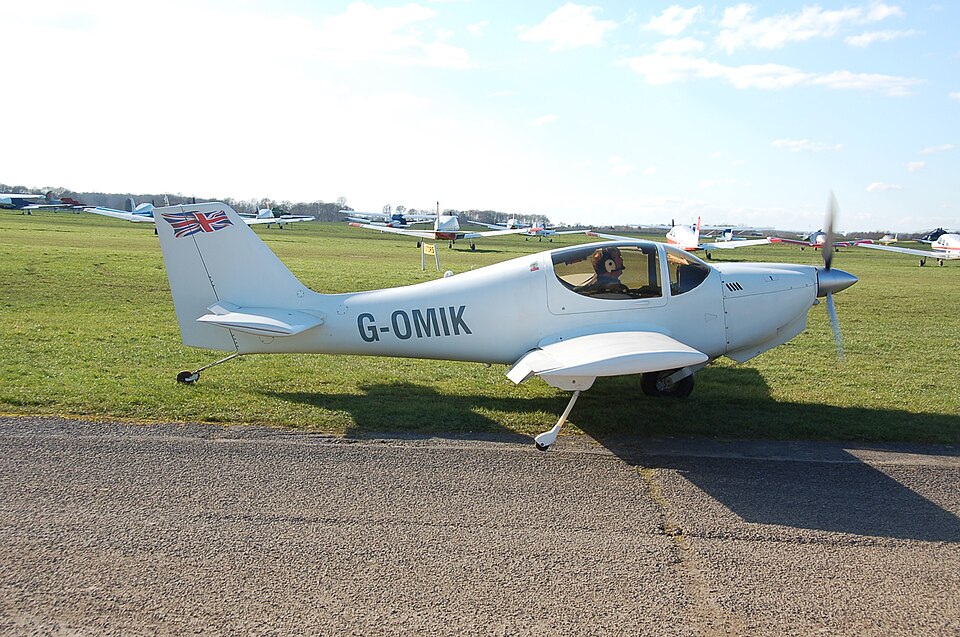
Accident Details
On 14 July 2003, at approximately 1940 hours UTC, a Europa aircraft (registration G-OMIK) was involved in an accident during landing at Shotteswell, Warwickshire. The single-engine aircraft, powered by a Rotax 914-UL piston engine and manufactured in 2001, was on a private flight. The pilot, the sole crew member, was accompanied by one passenger. No injuries were reported among the occupants.
Flight and Pilot Information
The pilot, aged 28, held a Private Pilot's Licence and had a total flying experience of 283 hours, with 59 hours on the Europa type. In the last 90 days, he had flown 41 hours, including 23 hours in the last 28 days. On the day of the accident, the pilot arrived at Shotteswell on his sixth flight, having already flown for nine hours.
Sequence of Events
The surface wind was 110° at 5 knots, favoring Runway 09. However, Runway 09 had a downhill slope and cars were parked at the far end. The pilot chose to land on the dry grass of Runway 15, which was 853 meters long and 18 meters wide. Crops 30 inches high were growing alongside the runway.
The pilot reported making a heavy landing, tail wheel first, close to the runway threshold. The aircraft bounced several times before settling on the runway surface, then drifted to the left. Despite applying full right rudder, the pilot could not prevent the left wing tip from entering the crops. The aircraft yawed rapidly to the left and then gently came to rest, with the nose in the crops and the tail on the runway.
Damage
The accident resulted in a twisted main wheel, damage to the tail wheel, and a compression crease under the fuselage. The damage to both wheels likely occurred during the heavy landing and may have affected directional control.
Pilot's Assessment
The pilot believes that fatigue was a major factor in this accident, affecting both the accuracy of his landing and his decision-making.