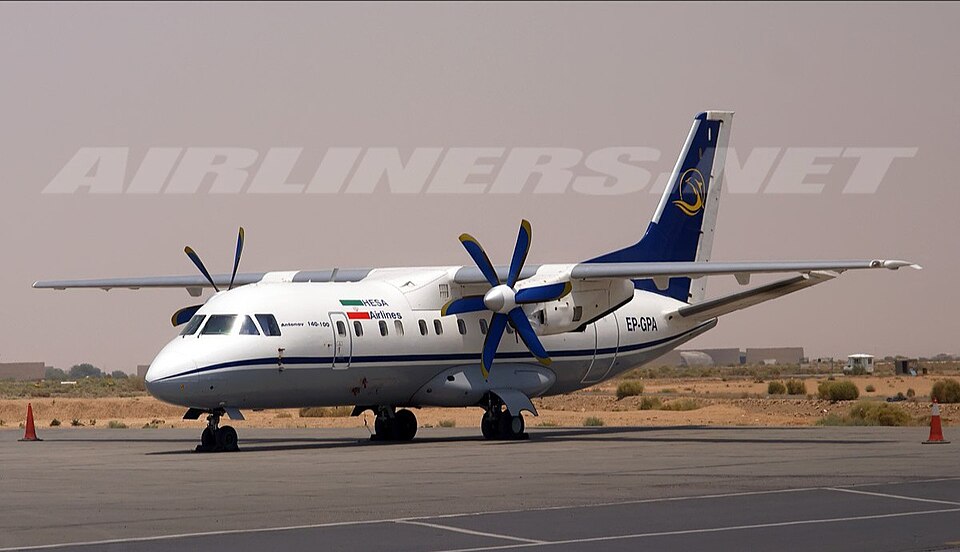
Accident
On August 10, 2014, at 04:52 UTC, Sepahan Airlines Flight 5915, an AN-140-100 aircraft with Iranian registration EP-GPA (MSN 90-05), experienced engine number 2 shutdown approximately two seconds before lift-off. The aircraft crashed shortly after takeoff from runway 29L at Mehrabad International Airport (THR) in Tehran, Iran. The aircraft was completely destroyed by impact forces and a post-crash fire. The accident resulted in 40 fatalities: 34 of the 40 passengers, all 4 flight attendants, and both flight crewmembers. Additionally, 11 passengers received serious injuries; 8 passengers recovered from injury.
Aircraft and Flight Information
The aircraft, an AN-140-100, was operated by Sepahan Airlines under the provisions of CAO.IRI operational requirements for commercial air transport. Before the accident flight, the aircraft had been dispatched from Isfahan and arrived at Tehran around 03:30. The dispatcher and pilot in command (PIC) performed load calculations using the aircraft flight manual (AFM) performance charts. Due to load limitations for the 15° flap position, the load sheet was changed and recalculated for a 10° flap position, resulting in a recalculated maximum takeoff mass (MTOM). The flight was en route to Tabas Airport. Visual meteorological conditions (VMC) prevailed, and an instrument flight rules (IFR) flight plan was filed.
Investigation and Probable Cause
Probable Cause
The accident investigation team determined that the main cause of this accident was a combination of: 1. Electronic engine control (SAY-2000) failure simultaneously with engine No. 2 shutdown, just about two seconds before aircraft lift-off. 2. Confusing AFM performance charts that led the pilots to rely on a performance calculation that significantly overestimated the aircraft's MTOM.
Contributing Factors
Contributing factors included:
- Unclear AFM procedures, including ambiguity in calculating maximum allowable takeoff weight, VR and V2 speeds, and climb segment definitions.
- Crew performance issues: the PIC rotated the aircraft at about 219 km/h (recommended 224 km/h per AFM table 4.2.3); the crew failed to perform manual propeller feathering for the failed engine; the PIC decided to fly with an aircraft that was approximately 190 kgf overweight; and the aircraft carried about 500 kg more fuel than required for the flight.
- During certification tests, the appearance of negative thrust from unfeathered propeller blades at takeoff was considered improbable, but in the accident flight, negative thrust did appear and affected flight performance.