Event
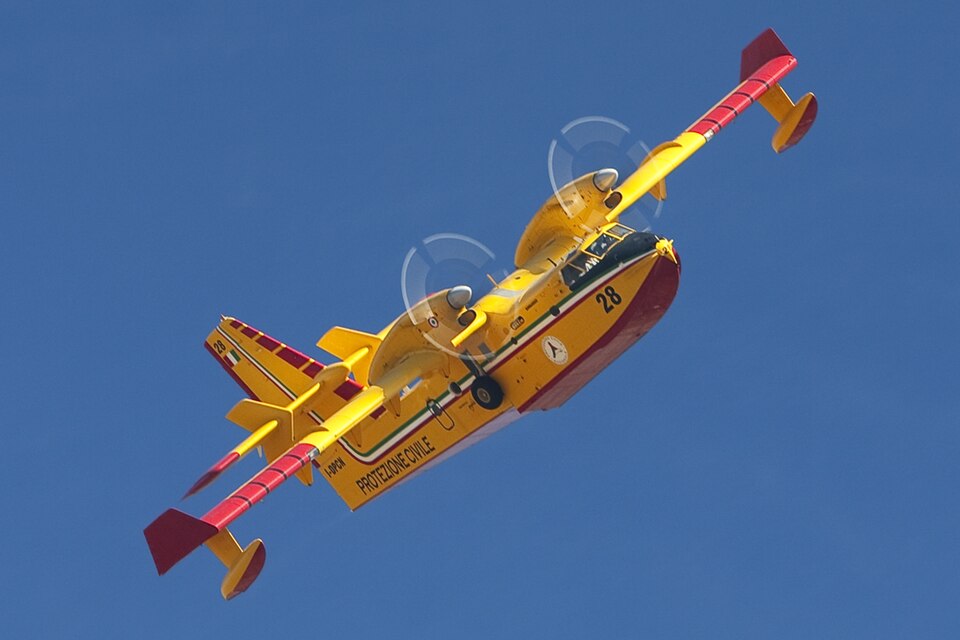
On 16 August 2003, at approximately 13:48 UTC (15:48 local time), a Bombardier Canadair CL-415 aircraft, registration I-DPCN, was engaged in a forest fire suppression operation in a mountainous area near Esine, Brescia. The aircraft entered a narrow valley with no exit and struck the left side ridge of the valley. The impact caused irreparable damage to the aircraft. Both pilots were injured during their evacuation, with one sustaining serious injuries.
Aircraft and Crew
The aircraft was a Bombardier Canadair CL-415, registration I-DPCN, operated by the Italian Department of Civil Protection's fleet of Canadair firefighting aircraft. The crew consisted of two pilots: a Canadian commander and an Italian copilot. The copilot handled radio communications in Italian with the ground fire director.
Flight History
Earlier that morning, the aircraft was assigned to a fire mission. It departed from Albenga at 08:35 UTC, landed at Verona Villafranca at 09:26 to drop off two passengers, then departed again at 09:38 for the fire area. After reconnaissance, the aircraft conducted eight water drops and eight scoops from Lake Iseo between 10:01 and 11:12 UTC. It returned to Verona at 11:35 for refueling (6,500 lbs of fuel). The second sortie began with a takeoff at 12:16 UTC. The copilot served as pilot flying during takeoff and navigation, but the commander assumed control upon arrival at the fire area. The accident occurred during this second sortie.