Background
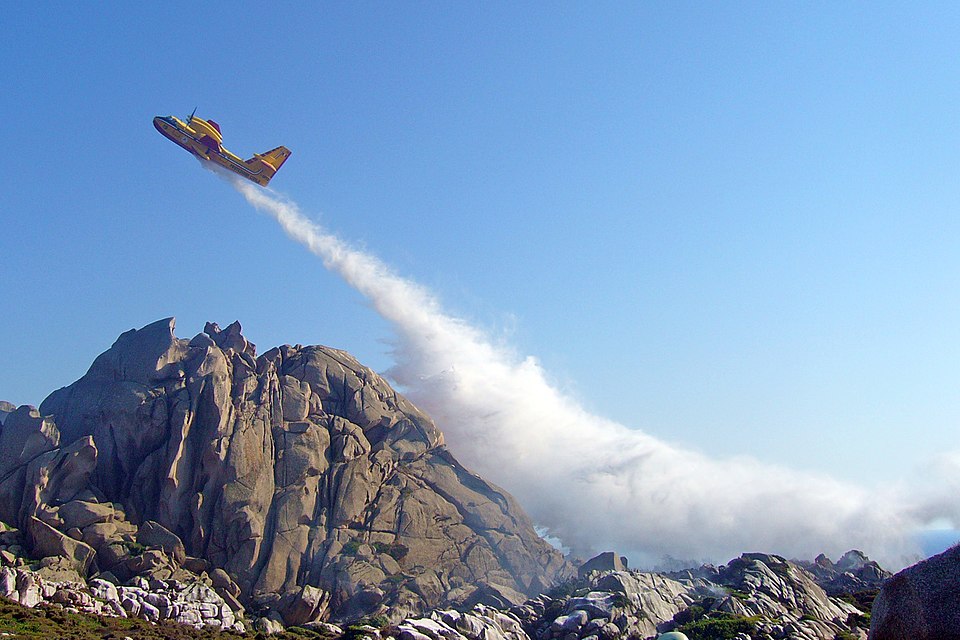
The aircraft involved was a Bombardier Canadair CL-415, registered I-DPCX and operating under the callsign CAN19. On 23 July 2007, it was engaged in firefighting activities in the mountainous region along the eastern border of the Sirente-Velino natural park, where extensive wildfires had been burning for several days. The aircraft had been making multiple sorties to support ground crews from the State Police, Carabinieri, Fire Brigade, and State Forestry Corps.
Flight Sequence
At 14:49 UTC, the aircraft interrupted operations to proceed to Pescara Airport for refueling and a crew change due to duty time limits. A new crew took over, and at 15:19 UTC, I-DPCX departed Pescara, scooped water from the sea off the city, and returned to the Roccapreturo area. During the approach, the crew contacted the ground operations director (a Forestry Corps inspector), who informed them that the fire in Roccapreturo appeared to be under control. The director then reported a new fire alarm in Succiano, where flames were approaching inhabited areas, but could not provide precise drop coordinates from his vantage point. The crew responded that they would manage and discharge water on the fire line.
At 16:05 UTC, the crew made their last radio contact with Pescara Tower. Shortly thereafter, a witness in Goriano Valli observed the aircraft emerging from a gorge between Monte Offermo and Colle Sangro, heading toward Succiano and entering the Aterno river valley. The aircraft flew over the fire area, executed a right turn of approximately 270° at a nearly constant altitude with a moderate bank angle, and aligned itself parallel to the west slope of Monte Offermo. At that point, it was flying at an altitude slightly below the summit of Monte Offermo (1307 m AMSL) and heading toward Colle Sangro (summit at 1166 m AMSL).
Witness Account
The witness reported that the aircraft then initiated a slight descent, entering a white smoke plume emanating from the wildfires below. The smoke enveloped the west slope and summit of Colle Sangro. Immediately after, the witness heard a dull thud, followed by a flash of flame.
Investigation
The Italian National Flight Safety Agency (ANSV) was notified on the same day. Due to ongoing wildfires and difficult terrain, the on-site inspection could only begin the following morning. The wreckage was located in an impervious area near Roccapreturo, a hamlet of Acciano, in the province of L'Aquila. The investigation was hampered by strong, intermittent winds that stirred up ash and debris.