History of the Flight
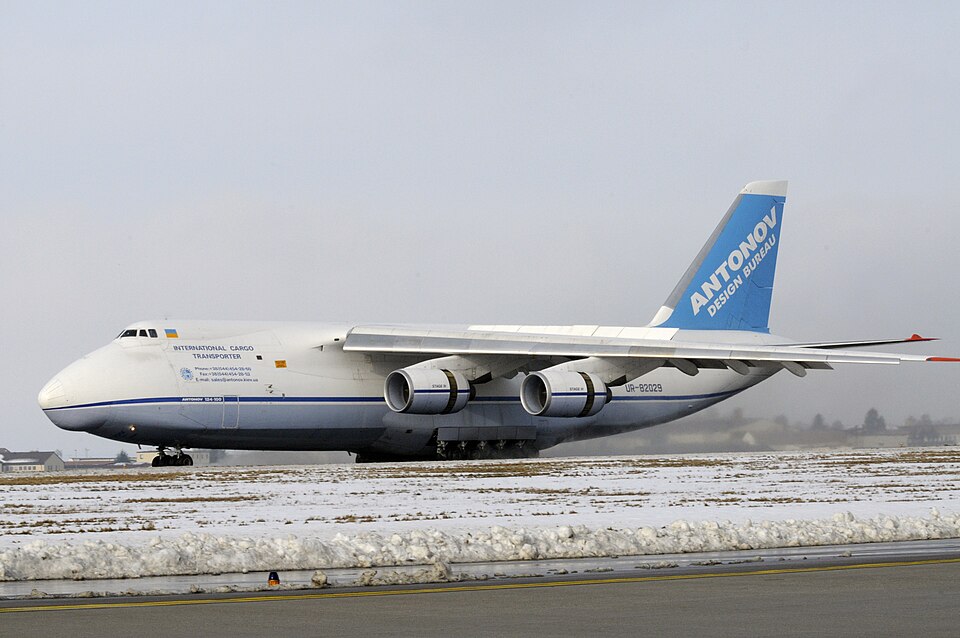
The aircraft, an Antonov 124-100 registered UR-82029, departed from Gostomel Airport near Kiev, Ukraine, bound for Zaragoza Airport in Spain. After an uneventful landing on runway 30R at 01:53 local time, the crew was instructed to exit the runway and follow a follow-me car. The aircraft proceeded via taxiway TA and C2-2 to the apron. Because the airport had no designated stands for the Antonov 124, it was assigned parking stands O and N, which had previously been used for Boeing 747 aircraft. The usual B747 stands were occupied that night.
Upon reaching the apron, the marshaller exited the car and began guiding the aircraft. As the crew followed the marshaller's signals, the left wingtip struck light tower number 6, then continued forward and struck light tower number 7, damaging the navigation light. The aircraft stopped after the second impact.
Aircraft Information
The Antonov 124-100 is a large cargo aircraft manufactured in Ukraine. It is powered by four ZMKB D18T turbofan engines, with a wingspan of 73.3 m, length 69.1 m, and height 20.78 m. The aircraft was built in 1991 (serial number 19530502630) and had accumulated 16,010 flight hours and 3,935 cycles at the time of the incident.
Crew and Personnel
The captain, aged 56, held an ATPL and had 10,621 total flight hours, with 5,781 hours on type. He was required to wear corrective lenses. The copilot, aged 42, held a CPL and had 1,638 total hours, with 1,178 on type. Both had been on duty for 6 hours 10 minutes. The flight navigator, aged 46, held a Ukrainian flight navigator's license. The marshaller, aged 52, had 30 years of experience and had been scheduled to end his shift at 23:15 but remained to guide incoming flights.
Meteorological and Aerodrome Conditions
The incident occurred at night under VMC with wind from 270° at 5 kt. Zaragoza Airport has two runways. According to the AIP, there are no parking stands suitable for an Antonov 124. The commercial apron has 16 stands, with two (J and K) designated for Boeing 747-400 aircraft. The stands used (O and N) were typically reserved for cargo or long-stay general aviation flights.
Communications and Recordings
After landing, the crew communicated with the tower and confirmed sighting the follow-me car. The marshaller requested that apron lights be energized. The cockpit voice recorder captured an engineer onboard exclaiming "Look out! To the left!" at the end of the recording. No communications between the crew and the marshaller were recorded. The flight data recorder showed normal taxi speeds.
Damage
The left wingtip was broken off after the first impact with light tower number 6, which was scratched. A second impact damaged the navigation light on the same wing when it struck light tower number 7. The aircraft sustained minor damage overall. No injuries were reported among the 16 crew or any third parties.
Additional Information
The airport's Apron Safety Regulations and marshalling procedures were documented. The ICAO Airport Services Manual recommends proper training for marshallers and clear stand allocation. The Zaragoza Airport's procedure for marshalling (ZA-OP) outlines signs and stand assignments, emphasizing safety and high-visibility clothing.