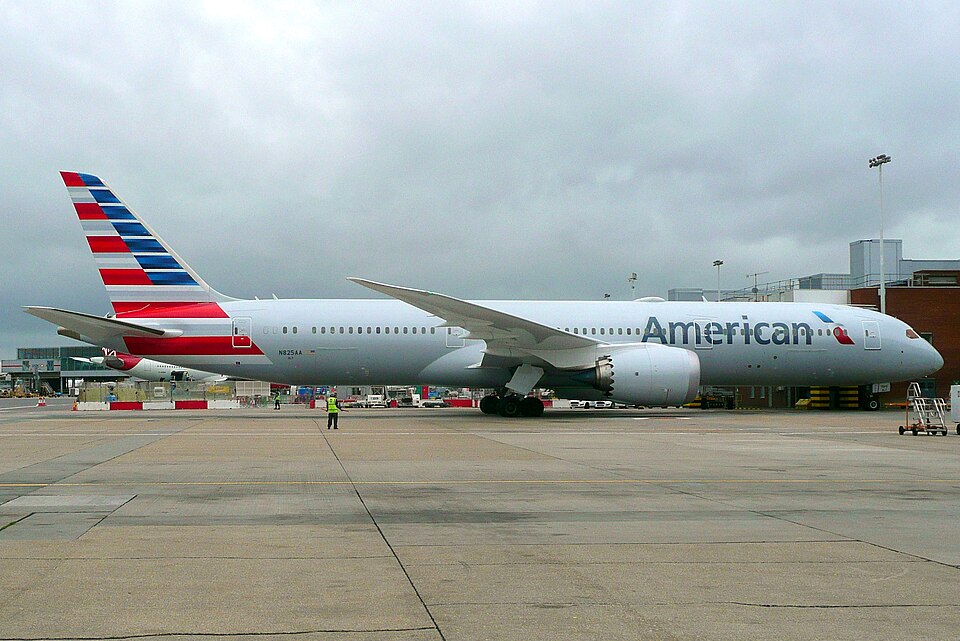
TCAS Resolution Advisory Avoided Mid-Air Collision in Madrid TMA

Casualties unknown • Madrid TMA (Madrid), ES

A Boeing 787-900 and a Cessna 172-M narrowly avoided a collision in the Madrid Terminal Control Area after air traffic controllers failed to resolve a potential conflict.

What happened

On 8 August 2017, a Boeing B787-90 , registration N825AA, operating an international passenger flight from Madrid-Barajas Airport to Dallas-Fort Worth, was climbing through 10,900 feet following a standard instrument departure. Simultaneously, a Cessna 172-M, registration EC-IEO, was cruising at 11,000 feet after departing from Madrid-Cuatro Vientos Airport.

As the aircraft paths converged, the Traffic Collision Avoidance System (TCAS) on the B787-90 issued a Resolution Advisory (RA) for a descent. The crew of the B787-90 immediately executed the maneuver, descending to 10,200 feet. The crew of the Cessna 172-M, which was not equipped with a TCAS system, observed the large aircraft descending and performed an evasive climb to 11,200 feet to maintain separation.

The investigation

The CIAIAC investigation examined the flight plans, air traffic control (ATC) communications, and the performance of the SACTA automated air traffic control system. The investigation focused on why the controllers did not intervene before the aircraft violated minimum radar separation distances. Investigators analyzed the workload of the controllers in the WDN sector and the technical functionality of the conflict alert system during the event.

Findings

  • The primary cause of the incident was that the executive controller focused his attention on resolving a conflict in another part of the airspace, neglecting to track and resolve the potential conflict between the two aircraft.
  • A conflictive flight plan for the Cessna 172-M had been approved, which violated airway altitude restrictions and placed it on a path toward conflicting traffic.
  • Communication difficulties on a dedicated line to the LEGT station forced the executive controller to assume the coordination duties of the planning controller, increasing his workload.
  • The automated conflict alert system failed to provide an early enough warning to allow the controller to take corrective action before the separation violation occurred.
  • The crew of the Cessna 172-M was unable to climb significantly higher because they were near their operational ceiling.

Safety action

  • ENAIRE is recommended to establish specific routes for aircraft departing Madrid-Cuatro Vientos on northerly IFR routes to minimize conflicts within the Madrid TMA.
  • ENAIRE is recommended to revise the Short-Term Conflict Alert (STCA) prediction algorithm to improve detection capabilities and evaluate the use of flight plan data in conflict predictions.

Probable cause

The incident was caused by the executive air traffic controller's failure to monitor a known potential conflict due to a preoccupation with resolving a separate issue in another sector. Contributing factors included an erroneous flight plan for the light aircraft, increased controller workload due to communication failures, and the delayed activation of the automated conflict alert system.

All Boeing 787-9 accidents →

Frequently asked questions

What happened in the 2017-08-08 Boeing 787 accident near Madrid TMA (Madrid), ES?

A Boeing 787-900 and a Cessna 172-M narrowly avoided a collision in the Madrid Terminal Control Area after air traffic controllers failed to resolve a potential conflict.

What aircraft was involved and where did it happen?

The accident on 2017-08-08 involved a Boeing 787, registration N825AA, at Madrid TMA (Madrid), ES.

What was the probable cause of the accident?

The incident was caused by the executive air traffic controller's failure to monitor a known potential conflict due to a preoccupation with resolving a separate issue in another sector. Contributing factors included an erroneous flight plan for the light aircraft, increased controller workload due to communication…

Loading the flight search…