Synopsis
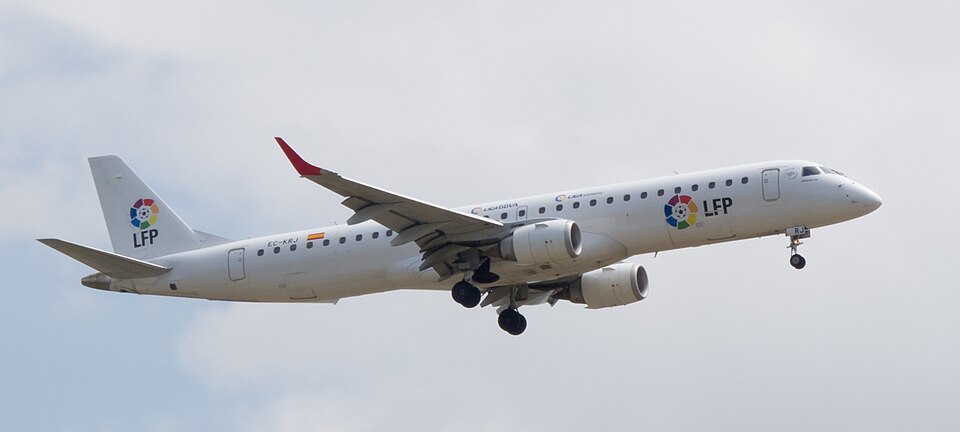
On 10 November 2018 at 20:20 local time, an Embraer ERJ 190, registration EC-KRJ, operated by Aeronova, and an Airbus A320, registration HA-LPM, operated by Wizz Air, were on approach to Adolfo Suárez Madrid-Barajas Airport. The incident occurred in the control zone (CTR) of the airport.
Factual Information
The Embraer aircraft was at flight level FL290, while the Airbus aircraft was at FL310. Air traffic control instructed the Airbus crew to descend to FL300. The crew did not initially read back the instruction. When the instruction was repeated, the controller erroneously stated FL200. The Airbus crew read back FL200 and initiated descent. The Embraer crew alerted ATC that the other aircraft had passed in front of them at a close distance. The minimum separation reached was 200 ft vertically and 0.2 nautical miles horizontally. ATC then instructed the Airbus to climb. Both aircraft continued their approach and landed without further incident.
Conclusions and Contributing Factors
The investigation concluded that the loss of separation occurred because an erroneous instruction was given to the crew of the Airbus aircraft regarding the level to which it had to descend. A contributing factor was that many aircraft were contacting ATC on the same frequency at the same time, which caused difficulties in communications.
Probable Cause
The loss of separation occurred because an erroneous instruction was given to the crew of the Airbus aircraft, regarding the level to which it had to descend.