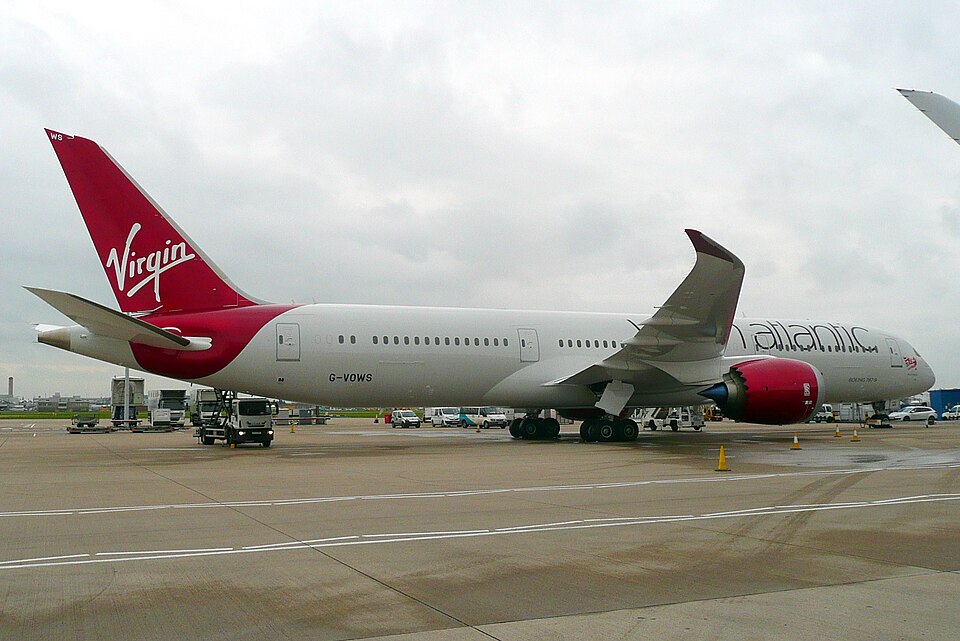
History of the Flight
On 29 September 2019, a Boeing 787-9 aircraft with registration G-VOWS, operated by Virgin Atlantic Airways as flight VIR206, was on a scheduled passenger service from London Heathrow Airport to Hong Kong International Airport (VHHH). Cleared by air traffic control, the aircraft proceeded direct to waypoint RIVER and descended to 4,500 feet for an Instrument Landing System (ILS) approach to Runway 25R.
At 16:29:59 hours, while the autoflight system was engaged and the aircraft was turning left to intercept the localizer from the south, it overshot the localizer course and continued to deviate northward toward terrain. The aircraft descended below the minimum sector altitude of 4,300 feet. The flight crew identified the deviation and prepared for a go-around. At 16:30:50 hours, ATC instructed the aircraft to go around. No Enhanced Ground Proximity Warning System (EGPWS) warnings were triggered.
Following the go-around, the crew conducted a second ILS approach to the same runway and landed without further incident. There was no damage to the aircraft and no injuries.
Investigation Findings
The investigation, conducted by the Air Accident Investigation Authority of Hong Kong with assistance from the UK AAIB, US NTSB, Boeing, and the operator, determined that the serious incident was caused by a software problem embedded in the flight control module (FCM) of the autoflight director system. This anomaly led to the aircraft failing to capture the localizer correctly, resulting in the deviation.
Cause
The investigation team found that this serious incident was caused by a software problem embedded in the flight control module (FCM) of the autoflight director system.