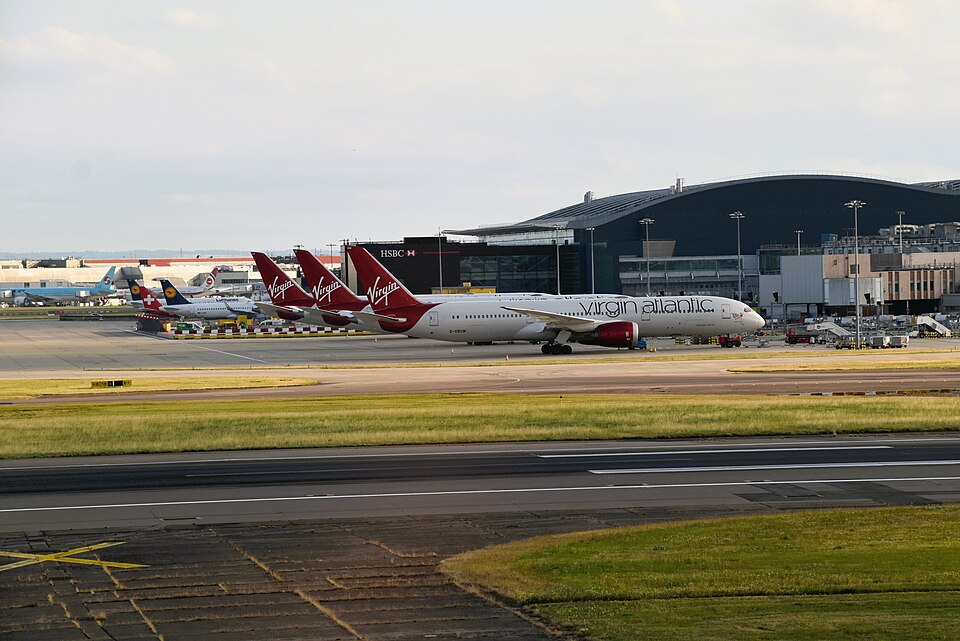
Flight History
At 1549 hrs on 18 October 2019, a Virgin Atlantic Airways Boeing 787-9, registration G-VBOW, operating flight VIR206, deviated from the localizer (LOC) course during an Instrument Landing System (ILS) approach to Hong Kong International Airport (VHHH). The approach was conducted in Visual Meteorological Conditions (VMC) to Runway 25R. With the autoflight system engaged, the aircraft intercepted the localizer but then overshot the intended heading, diverging from the localizer course toward terrain to the north. No Enhanced Ground Proximity Warning System (EGPWS) warnings were triggered.
The Pilot Flying (PF) disengaged the autoflight system and assumed manual control. The aircraft was re-established on the ILS heading approximately 12 nautical miles from the runway threshold and landed without further incident. There was no damage to the aircraft and no injuries.
Aircraft Information
The incident aircraft was a Boeing 787-9, registration G-VBOW, operated by Virgin Atlantic Airways. The aircraft was equipped with an autoflight director system that included a flight control module (FCM). The investigation focused on the autopilot flight director system (AFDS) and its software.
Investigation Findings
The investigation team determined that the deviation was caused by a software problem embedded in the flight control module (FCM) of the autoflight director system. This software issue led to the localizer capture anomaly. The investigation also noted that no other factors such as weather, navigation aids, or crew performance contributed to the incident. The crew's actions in disengaging the autoflight and taking manual control were appropriate.
The investigation made two safety recommendations. Proactive safety actions were taken by Boeing, Virgin Atlantic Airways, and the Civil Aviation Department of Hong Kong. Boeing issued a Flight Crew Operations Manual Bulletin and an Alert Service Bulletin. Virgin Atlantic issued a Notice to Aircrew and a Notice to Airmen, incorporated the Alert Service Bulletin, and replaced headsets on their B787 aircraft. The Civil Aviation Department conducted a comprehensive check of the ILS, issued an Aeronautical Information Circular, and communicated with the Federal Aviation Administration.
Cause
The incident was caused by a software problem embedded in the flight control module (FCM) of the autoflight director system.