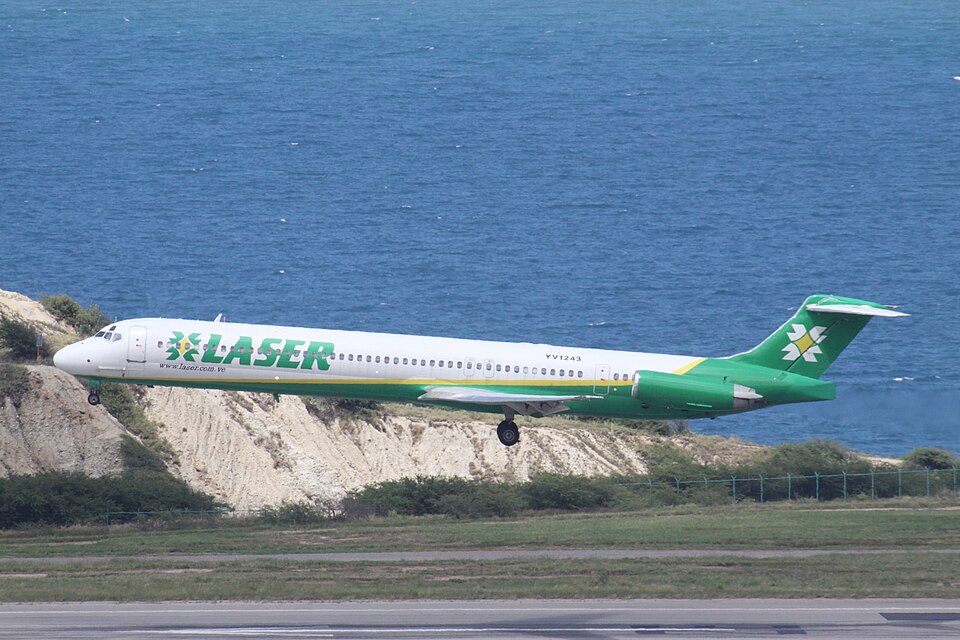
On February 26, 2023, a MCDONNELL DOUGLAS DC-9-81 (registration YV1243) operated by LÍNEA AÉREA DE SERVICIO EJECUTIVO was involved in an aviation accident near EN RUTA DEL AEROPUERTO INTERNACIONAL, VE. This summary draws on records from the Venezuelan Civil Aviation Accident Investigation Board (JIAAC Venezuela); 4 related events involving the same aircraft type or operator are linked below.
On February 26, 2023, a McDonnell Douglas DC-9-81 (YV1243) experienced a cabin depressurization alert at FL330. The crew descended to FL110, where pressurization normalized, and landed safely in Maiquetía with no injuries.
Incident Overview and Flight Details On February 26, 2023, a McDonnell Douglas DC-9-81, registration YV1243, serial number 49908, operated by Línea Aérea de Servicio Ejecutivo Regional, C.A. (LASER), departed from the Juan Pablo Pérez Alfonso International Airport in El Vigía, Venezuela (SVVG), at 18:44 UTC. The flight was bound for the Simón Bolívar International Airport in Maiquetía, Venezuela. The aircraft carried 98 people on board, consisting of a pilot, a co-pilot, four flight attendants, two other crew members, and 90 passengers. ## Event Sequence At 19:15 UTC, while approximately 40 nautical miles from the Barquisimeto VOR (SVBM) and stabilized at flight level 330 (FL330), the flight crew observed a Cabin Alt alert in the cockpit. Upon verifying a cabin depressurization, the crew immediately applied the procedures established in the Quick Reference Handbook (QRH). They donned oxygen masks and, after receiving authorization from the Maiquetía Area Control Center, initiated a descent. The aircraft descended to flight level 110 (FL110), where the cabin pressurization normalized. The flight completed its route without any additional incidents and landed safely at 19:41 UTC. The aircraft sustained no damage, and all passengers and crew were unharmed. ## Aircraft and Maintenance Information The aircraft is a twin-engine, turbofan-powered, land-based transport category aircraft manufactured by McDonnell Douglas Aerospace Company. It is equipped with two Pratt & Whitney JT8D-217 engines located in the tail and features a retractable tricycle landing gear. The maximum takeoff weight is 67,812.05 kg (149,500 lbs). The aircraft held valid certificates of registration, airworthiness, and radio communication station issued by the Venezuelan aeronautical authority (INAC) at the time of the incident. The aircraft was used for corporate purposes. The maintenance organization responsible for the aircraft's last preventive and scheduled maintenance services was OMAC N° 475 LASER AIRLINES, C.A, located at the Simón Bolívar International Airport in Maiquetía. ## Crew Qualifications The pilot, aged 73, held a valid medical certificate, aeronautical license, and ratings issued by the Venezuelan aeronautical authority (INAC), including Instrumental Flight and MD80 Captain/PIC. The co-pilot, aged 40, also held a valid medical certificate, aeronautical license, and ratings, including Instrumental Flight and MD80 Co-pilot/SIC. ## Investigation and Findings The investigation process was in its development and execution phase at the time of the preliminary report. The Venezuelan accident investigation authority (JIAAC) was present during the inspection of the cabin depressurization systems by the maintenance organization. Visual inspections of the air conditioning systems were conducted with the engines off, with the left air conditioning on, and with the right air conditioning on; no leaks were detected in any of these conditions. Inspections of the Pressurization Control Boxes in the electrical/electronic compartment were performed, and tests indicated they were functioning without issues. A test of the cabin pressurization system also showed it was functioning without issues. Further pressurization tests were conducted using the Auxiliary Power Unit (APU) and with both engines running; in both cases, no loss of pressure was observed. During the pressurization tests, it was observed that the emergency oxygen masks for the pilot and the first officer were still in their seals, and the brake of the passenger cabin oxygen mask deployment switch was broken. The broken brake was subsequently replaced. As an additional preventive measure, the automatic pressure control module located on the cockpit overhead panel and Pressurization Control Box #2 located in the electrical/electronic compartment were replaced. ## Meteorological Conditions The meteorological conditions on the day of the incident were characterized by winds of 0 knots, unlimited visibility, and generally good weather throughout the day. ## Notifications In accordance with Chapter 4 of Annex 13 of the Convention on International Civil Aviation, the incident was reported to the International Civil Aviation Organization (ICAO) ADREP system. Notifications were also sent via email to the State of Design and the State of Manufacture of the aircraft, the United States of America. The United States responded to the notification and assigned an accredited representative.