History of the Flight
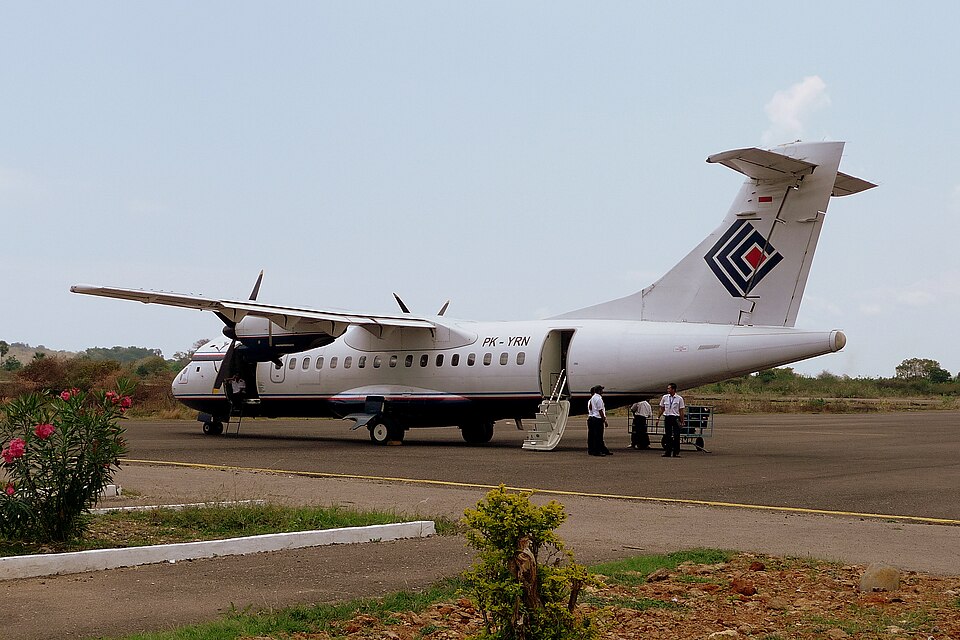
On 16 August 2015, PT. Trigana Air Service flight, an ATR 42-300 registered PK-YRN, departed from Jayapura, Papua, Republic of Indonesia, for a visual approach to runway 11 at Oksibil. The aircraft was on a visual approach guidance route after passing point MELAM. The flight data recorder and cockpit voice recorder were recovered and analysed by the Komite Nasional Keselamatan Transportasi (KNKT).
Aircraft and Operator Information
The aircraft was an ATR 42-300 with registration PK-YRN, operated by PT. Trigana Air Service. The operator had an Air Operator Certificate (AOC) and conducted operations under Civil Aviation Safety Regulations Part 121. The aircraft was equipped with an Enhanced Ground Proximity Warning System (EGPWS); details of its installation are described in the operator's documentation.
The Accident Site and Wreckage
The aircraft impacted terrain on Tanggo Mountain, near Oksibil. The wreckage distribution showed a fire area indicated by a red circle; post-impact fire damaged the fuselage. Opening forest trees along the flight path suggested the aircraft's trajectory prior to impact.
Flight Path and Descent Profile
Predicted flight path from Jayapura to the final position was reconstructed. After passing point MELAM, the aircraft followed a visual approach path to runway 11. The descent profile prior to impact was approximated. The torque trends from the last five minutes of the flight were extracted and analysed.
Investigation and Findings
The KNKT conducted the investigation. The report includes findings on descent and approach procedures, EGPWS terrain warning, and organizational oversight. The investigation also reviewed the operator's company operations manual, standard operating procedures, maintenance management, and training.
Safety Actions and Recommendations
Safety actions were taken by PT. Trigana Air Service following the accident. Safety recommendations were issued to PT. Trigana Air Services, AirNav Indonesia, and the Directorate General of Civil Aviation (DGCA).