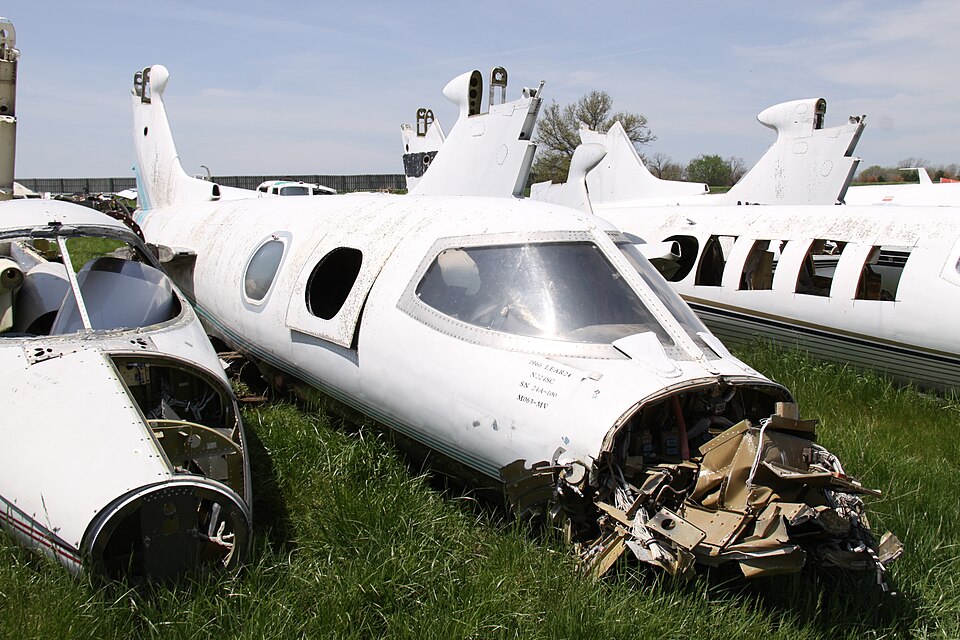
Accident Details
The pilots reported that the approach and landing were normal. However, during the landing rollout, approximately 2,000 feet down the runway, the brakes became ineffective. The aircraft continued beyond the runway end, traveling down an embankment, crossing a four-lane road, and finally coming to rest in a drainage ditch.
Post-Crash Examination
A post-crash examination of the main landing gear brakes revealed that three out of four brake assemblies were worn beyond allowable limits. Additionally, all four antiskid wheel generators were not producing voltage within the allowable limits. The outboard right main tire failed during the landing roll due to the antiskid system becoming inoperative as a result of low voltage from the wheel generator.
Maintenance History
The aircraft had received an A-1 through A-6 inspection two days before the accident, and this was the first flight since that inspection. The A-5 inspection specifically requires inspection of the landing gear brake assemblies for wear, cracks, hydraulic leaks, and release.
Probable Cause
The probable cause, as determined by the official investigation, was the inadequate inspection of the main landing gear brake assemblies, which led to operation of the aircraft with worn brakes that failed during the landing roll. Contributing factors were the descending terrain, roadway, and ditch.