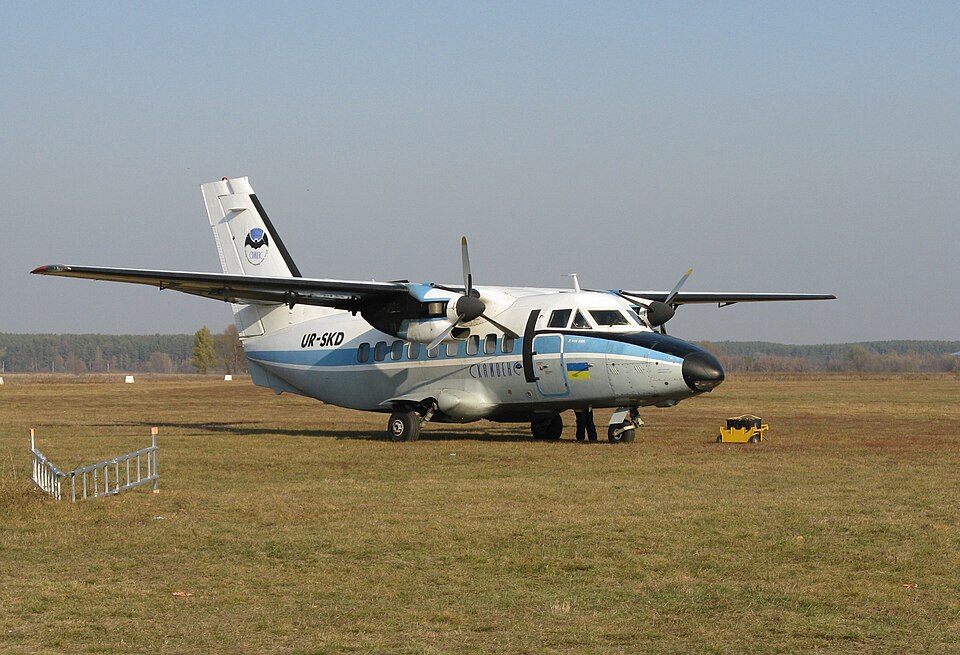
Incident Overview
A twin-engine aircraft owned by Skaidens (Skydance) and operated on behalf of the Ukrainska Shkola Pilotov (Ukrainian Pilots' School) crashed while on a local skydiving mission. The aircraft carried 20 skydivers and two pilots. After takeoff from Borodyanka Aerodrome, the crew observed deteriorating weather conditions, including an approaching thunderstorm, and decided to cancel the mission and return to the airport.
Accident Sequence
During the final approach, the aircraft encountered downdrafts and a microburst. It lost altitude and crashed in a field approximately 900 meters short of the runway threshold. Five skydivers were killed, and 17 other occupants sustained injuries, some serious.
Probable Cause
According to the findings of the commission of inquiry, the most likely cause of the crash was the impact of the aircraft in a low-altitude wind due to strong downward air flow (micro-burst) during the landing of the aircraft in thunderstorms due to coincidence of the following negative factors:
- Failure of the crew to perform a go around or divert to the alternate aerodrome.
- A rapid increase in the speed of movement of the thunderstorm in the direction of the Borodyanka airfield area.
- Lack of training on the simulator in the conditions of wind shear, lack of experience in the crew on approach to landing in the conditions of wind shear, in particular micro-burst.
- Insufficient aeronautical equipment (lack of meteorological radar on the plane and airfield).
- Lack of information for the crew about the forecasted and actual meteorological conditions at the landing aerodrome, warnings about the forecasted/available wind shift at Borodyanka aerodrome.
- The crew was not sufficiently informed about the flight conditions due to insufficient lighting of the cockpit and failure of the instrumentation of the aircraft due to a power failure during approach in thunderstorm conditions.
- Lack of sufficient experience of the crew to perform activities and landings in conditions when the landing weight exceeded the maximum allowable, due to the presence of skydivers on board the aircraft.
- Motivation of the crew to perform the landing approach on the first attempt, due to insufficient information about the storm at the aerodrome. The information on wind increase and its direction (provided to the pilot) was perceived by the crew as possible conditions for landing because their parameters did not exceed the limits allowed by the AOM of the aircraft.
- Overloading of the aircraft, motivation of the decision of the captain to perform landing at the aerodrome of departure (Borodyanka) due to the presence of unregistered passengers on board, due to improper organization of boarding of skydivers at the aerodrome Borodyanka.
- Insufficient organization of flights at Borodyanka airfield in terms of meteorological support.
- Insufficient (weak) regulatory, regulatory, legislative framework for parachuting.