Background
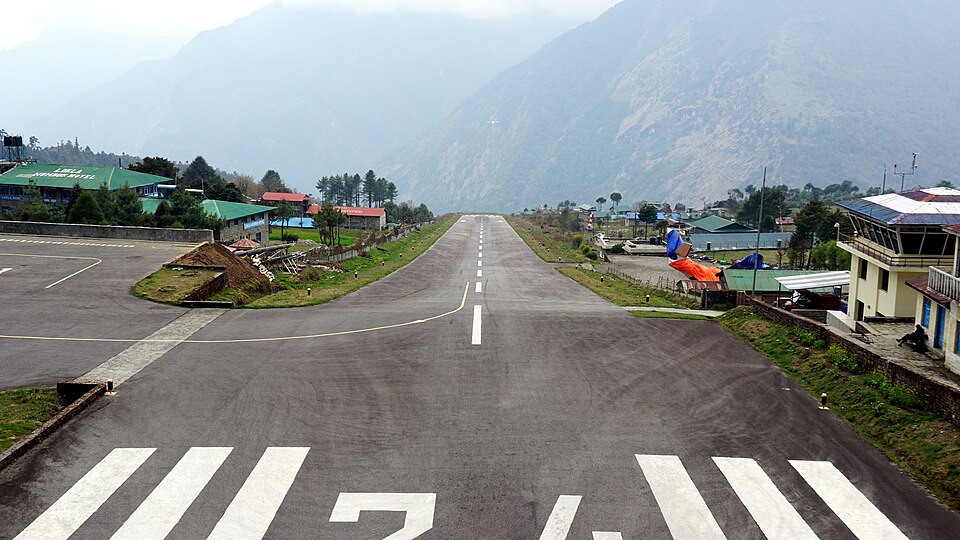
On May 27, 2017, Goma Air (now Summit Air) operated a LET 410 UVP-E20, registration 9N-AKY, on a cargo flight from Kathmandu to Lukla as Goma Air 409. The aircraft carried 1,680 kg of cargo, with two cockpit crew and one cabin crew on board; no passengers were on the flight. The pre-monsoon period featured cloudy conditions at Lukla since morning, with ceiling and visibility initially reported as acceptable.
Flight Sequence
The flight departed Kathmandu at 0744 UTC. Before departure, pilots obtained the latest weather for Lukla, Phaplu, and Rumjatar. The pilot-in-command (PIC) decided to remain south of the track to avoid terrain and cloud. About 11 miles east of Kathmandu, the crew was informed that Lukla was experiencing heavy rain and the airport was closed. Due to developing air traffic congestion at Tribhuvan International Airport (TIA), the flight continued toward Lukla. After crossing 26 miles from Kathmandu, the crew was told that rain had ceased and the airport had reopened.
Weather Conditions
An AS350 helicopter (9N-AGU) departing Lukla at 0803 UTC reported unstable wind on final for Runway 06. Enroute weather beyond the Lukla valley was reported as good, but it was anticipated that fixed-wing aircraft might find the valley entry difficult. Lukla Tower relayed weather updates to Goma Air 409 when it first established contact at 0810 UTC. The valley's ceiling and visibility remained acceptable for VFR until 0812 UTC, but weather deteriorated rapidly thereafter. CCTV footage showed rapidly deteriorating conditions before and after the crash. Mountain ridges were visible through a thin layer of foggy cloud until 0814 UTC. Shortly after, the right base for Runway 06 became covered, and cloud from the left base moved toward final. The tower did not close the runway as per standard operating procedures despite the deteriorating weather.
Final Approach and Stall
At 0816 UTC, the aircraft reported entering the valley. The first officer sighted the runway at 0817 UTC (64 seconds before impact), and the PIC acknowledged. The aircraft was at approximately 9,100 feet and maintained about 9,000 feet for 21 seconds. At 0817:12 (48 seconds before impact), the tower reported a westerly wind of 4 knots and that the runway was clear. The PIC inquired about rain; the tower confirmed no rain, and the aircraft began descending. The PIC, also the pilot flying, deviated to the right while descending. At 0817:35 (25 seconds before impact), descending through 8,650 feet, the first officer warned the PIC they were too low. The PIC did not respond and continued descending. At 8,500 feet, the first officer warned again, and the PIC asked where the runway was. The first officer directed toward the runway, but it was too low. Short stall warnings sounded, then a continuous stall warning for 13 seconds until impact. The last recorded words in the cockpit voice recorder were "Do not pull too much." An abrupt change in aircraft attitude to climb and reach the threshold height of 8,900 feet (on Kathmandu QNH) in landing configuration (gear down, full flaps) created excessive drag, causing a stall. The left wing struck a small tree branch 180 feet short of the threshold, and the aircraft impacted sloping terrain 100 feet short of the runway. The engine ran for about a minute after the crash; no post-crash fire occurred. The crew consisted of pilot Paras Kumar Rai, co-pilot Srijan Manandhar, and cabin crew Pragya Maharjan.
Probable Cause
The official investigation concluded that the probable cause of the accident was an aircraft stall resulting from excessive drag due to a sudden increase in angle of attack at low speed (below Vref) while attempting an immediate climb in landing configuration (full flaps and landing gear down), necessitated by the critical situation of the final phase of flight. Contributing factors included critical terrain, rapidly deteriorating weather, pilot loss of situational awareness, improper response to stall warning, and violations of standard operating procedures by both air traffic services and the pilot.