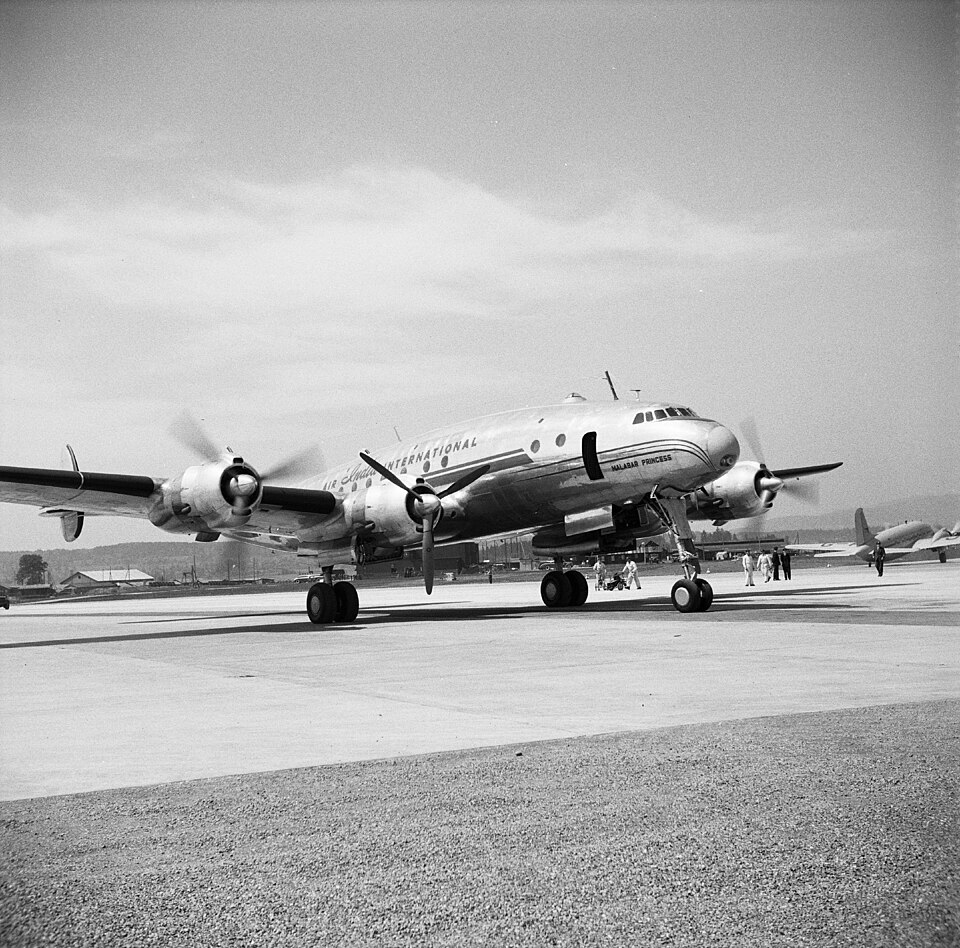
Incident Overview
On 3 November 1950, an Air India aircraft named 'Malabar Princess' crashed into the Mont-Blanc massif in the French Alps. The four-engine aircraft was operating a direct flight from Cairo-Almaza Airport to Geneva-Cointrin Airport, completing an international service from Bombay to London. It carried 40 passengers and a crew of 8. All passengers were Indian and Pakistani marines en route to join their boat in Newcastle upon Tyne.
Flight and Crew
The aircraft departed Cairo-Almaza at 0209 local time. About 20 minutes before its estimated time of arrival in Geneva, while cruising at an altitude of 15,500 feet, the crew informed air traffic control that they were flying over Grenoble. The radio officer at Geneva Airport misinterpreted this position and asked the crew to switch to 333 kHz for a direction-finding check. The crew never contacted this frequency, and the aircraft disappeared shortly thereafter.
Disappearance and Search
When the aircraft failed to arrive at Geneva Airport, search and rescue operations were launched by French, Swiss, and Italian authorities. The wreckage was located two days later, on Sunday, 5 November 1950, at an altitude of 4,671 meters on the Rocher de la Tournette, approximately 300 meters from the Vallot Refuge. The aircraft disintegrated upon impact, and all 48 occupants were killed.
Probable Cause
The official investigation determined that at the time of the accident, a strong wind was blowing from the west, and it is believed that the crew misinterpreted their position. The crew thought they were overflying Grenoble when, in reality, the aircraft was approximately 111 kilometers northeast of Grenoble, vertical to the Mont-Blanc mountain range. In 1950, the area control center of Geneva-Cointrin was not equipped with a surveillance radar system. The only available systems were a medium-frequency direction finder and high-frequency transmitters with four available frequencies. At that time, Air India did not use the Genoa-Torino-Geneva route to avoid the Alps and preferred to fly the Nice-Gap-Grenoble-Geneva path marked by broadcast stations, which unfortunately did not transmit 24 hours a day. It appears that the accident was the result of a controlled flight into terrain mostly caused by unfavorable wind.