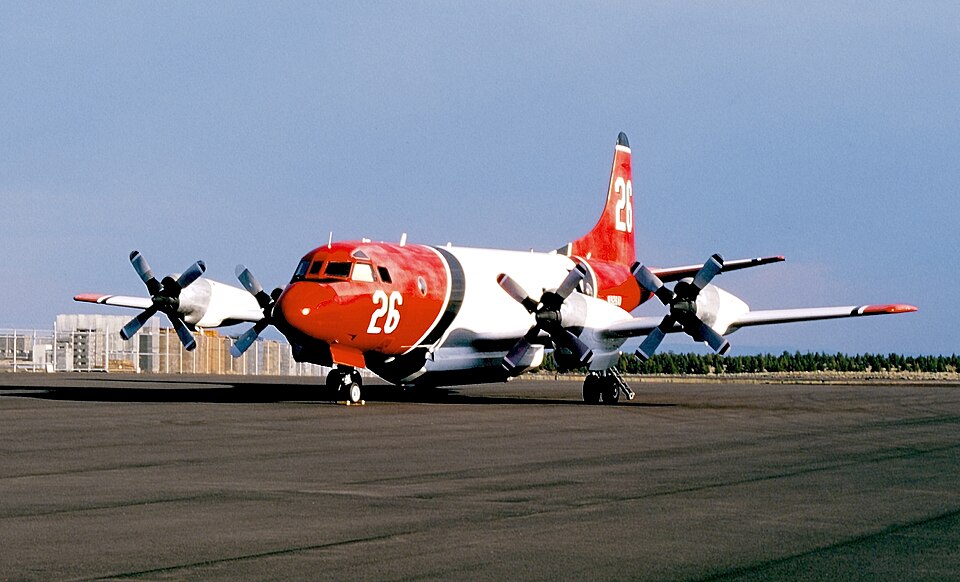
Flight Details
On the day of the accident, the air tanker airplane had completed nine previous flights totaling 5 hours and 46 minutes. These flights were part of recurrent training for pilots scheduled to conduct fire-fighting operations for the United States Department of Agriculture Forest Service (USFS) during the upcoming fire season. No mechanical problems were reported by pilots on earlier flights. The accident flight, the tenth of the day, was a training mission to practice water drops over rugged mountainous terrain north of the airport. Aboard were the captain, the copilot, and the company's Chief Pilot, who provided flight instruction and had been on all flights that day.
Accident Sequence
Radar data showed the flight departing the airport and proceeding about 10.5 nautical miles north, where it began maneuvering in a pattern consistent with practice water drops. The airplane entered a right-hand racetrack pattern oriented northeast-southwest, with drops apparently made on the southwest leg. During the last minute, the airplane was on the northeast leg, flying up a valley with uphill terrain to the northeast. Initially near the valley's center, the flight path deviated toward rising terrain on the eastern side during the final 36 seconds. The last two radar hits placed the airplane below 100 feet above ground level. The airplane had completed approximately 1.75 racetrack circuits when data ended at 2,900 feet msl heading northeast. The initial impact point was about 2,150 feet northwest of the last radar point at 2,450 feet msl, indicating a left descending turn of about 90 degrees. No distress calls were received. Witnesses reported a "fire ball" at the time of the accident.
Wreckage Examination
Examination revealed the airplane impacted on a heading of about 304 degrees magnetic in a 40-degree left bank, with the left wingtip striking first. The aircraft was severely fragmented, and a post-crash fire burned most of the structure and surrounding vegetation. All major components were accounted for. There was no evidence of pre-existing structural failures or foreign object impact. All four engines and propellers were found at the site; engines showed no uncontainment, case rupture, or pre-impact fire. Damage to compressor and turbine rotors was consistent with operation. Cockpit engine gauges indicated all four engines were running at about 2,200 shaft horsepower at impact. Maintenance records showed no chronic issues or anomalies. The airplane was not equipped with a cockpit voice recorder or flight data recorder, and was not required to have them. The reason for the in-flight collision with terrain could not be determined.