History of the Flight
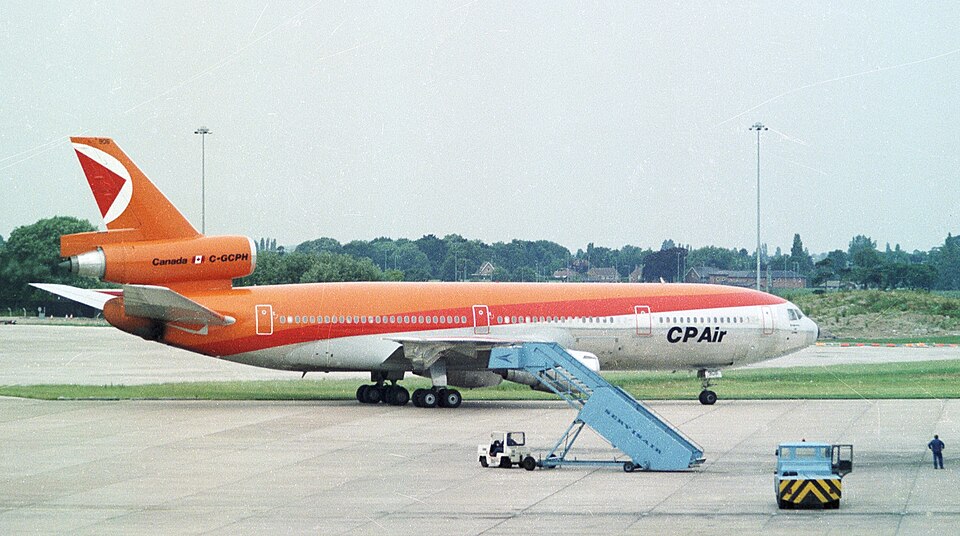
The aircraft operated a scheduled passenger flight from Calgary to London, landing on Runway 27L. After exiting the runway, it taxied east towards Block 85 and held for clearance to cross Runway 27L to Terminal 4. Cleared to expedite crossing, the commander used slightly more thrust than normal. Shortly after, vibration was felt. The crew initially suspected a deflated tyre but taxiing characteristics were normal. The aircraft continued to stand 12 at Terminal 4. As it approached, vibration increased. The flight engineer noted No 1 engine N1 RPM at 17% instead of expected 34%. The commander advanced the thrust lever but got no response and shut down the engine. About 30 minutes later, ATC was informed of a mechanical failure. Debris was found in Block 91, indicating the engine failed after crossing Runway 27L.
Initial Inspection of No 1 Engine
Visual inspection on the ramp showed metallic debris in the jetpipe and damage to the 4th stage low-pressure turbine (LPT). There were tears, bulges, and holes in the LPT casing near the 1st stage LPT rotor. Engine cowlings were undamaged; debris in the cowling included LPT blade sections with dovetail roots and nozzle guide vane fragments. These items were retained and the engine was sent to MTU in Hanover for strip examination.
Strip Examination at MTU Hanover
Oil and fuel filters and chip detectors showed no debris from bearing or oil seal failure. Borescope inspection of the LPT revealed severe damage to nozzle guide vanes and turbine blades. Several 1st stage LPT blade root dovetails were missing from the disc. No significant damage upstream of the HP turbine. The investigation focused on the LPT module.
The coupling nut securing the LPT rotor to the LP shaft had a breakaway torque of approximately 20,000 ft-lbs, indicating no looseness. After separating the module, the HP rotor system was free with no rubbing. Minor scratches on HP turbine blades were within limits.
The LP turbine rotor positioning shim was undistorted and within dimension range. After removing the turbine rear frame, the LPT case halves were removed with difficulty. Severe damage was found throughout all four LPT stages. Damage was most severe at stage 1, with 75 out of 128 blade roots missing from the disc. Remaining blade roots had sheared aerofoils. Stage 1 blade retainers showed abrasion damage from contact with the LPT1 nozzle air seal discourager leg. Where the retainer upstand was worn through, blade roots slid aft. No evidence of interference severe enough to damage the disc face.
Two standards of stage 1 blades were noted: those with thicker angel wings had rubs under their platforms, consistent with contact with the discourager leg rim.
The LPT1 nozzle guide vane assembly had all vanes in place but with trailing edge damage in the direction of rotation; leading edges undamaged. No hard particles passed forward.
The stage 1 nozzle air seal had two rub areas from the disc knife seal: one at bottom (0.75 in wide, 0.030 in deep) and one at top (0.003 in deep). The discourager leg had two circumferential segments of missing material due to cracking, with lengths of 4.50 in and 6.65 in, and additional cracks. Rubs on the aft face of the seal were observed.