Casualties unknown

2011-12-30: Asukoht (ES-PWA) — EE

EE

On December 30, 2011, an Asukoht (registration ES-PWA) was involved in an aviation accident near EE. Investigators recorded the probable cause as: The incident was caused by the pilot in command's haste to compensate for a delay, leading to a loss of attention and the failure to secure takeoff clearance or complete the required pre-takeoff checklists. This summary draws on records from the Estonian Safety Investigation Bureau (OJK).
Sourcesthe Estonian Safety Investigation Bureau (OJK)Primary reportUpdated 1781031101Data APIEditorial standards
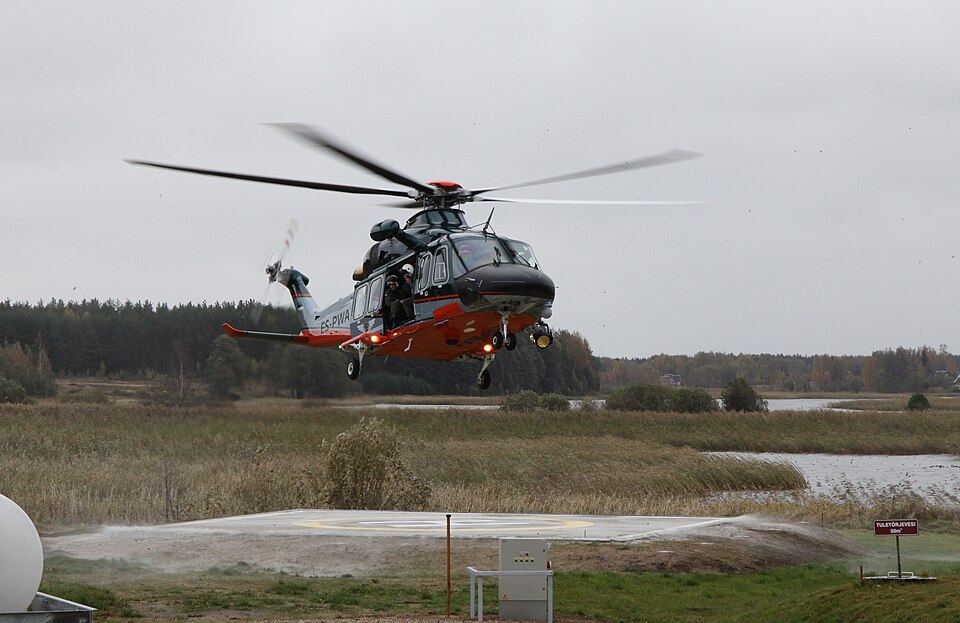
Aircraft registered ES-PWA
Aircraft registered ES-PWA. Photo: U.S. Army Corps of Engineers photo by Carol E. Davis U.S. Army Corps of Engineers Europe District from Wiesbaden, Germany / Public domain, via Wikimedia Commons

An AgustaWestland AW139 performed a takeoff without air traffic control clearance at Tallinn Airport, nearly conflicting with an Airbus A319 on its takeoff roll.

What happened

On 30 December 2011, at approximately 15:08 local time, an AgustaWestland AW139, registration ES-PWA, operated by the Border Guard Aviation Unit, initiated a takeoff from Tallinn Airport without receiving necessary clearance from air traffic control. The helicopter was scheduled for a border patrol flight to southeastern Estonia.

The crew had arrived at the airport earlier that day, but technical issues delayed their departure by approximately one hour. Feeling time-pressured due to this delay, the crew prepared for departure in haste. After taxiing to the intersection of stand B and taxiway A, the pilot in command lifted the aircraft into the air and commenced a westward heading. At that same moment, an Airbus A319 was beginning its takeoff roll on runway 26.

The conflict was identified when the helicopter reached an altitude of approximately 100 feet, while the departing airliner was at 72 feet. The air traffic controller observed the movement and immediately instructed the helicopter crew to remain north of the runway. The crew halted their forward progress and remained in a hover until clearance was granted to continue the flight as planned.

The investigation

The Estonian Safety Investigation Bureau (ESIB) examined the sequence of events, including radio communications and Surface Movement Radar (SMR) data. The investigation found that while the crew held all necessary licenses and medical certifications, there were significant procedural gaps.

The investigation noted that the pilot in command was driven by a desire to make up for lost time, despite no actual operational pressure from the Border Guard unit. Furthermore, it was established that the aircraft's Before-Takeoff Checklist had not been completed, specifically omitting the verification of ground clearance. The investigation also found that the SMR system did not trigger an automatic warning because the two aircraft were traveling on parallel trajectories.

Findings

  • The primary cause of the serious incident was distraction caused by the pilot in command's rushing, which resulted in the takeoff occurring without air traffic control clearance.
  • The crew failed to follow standard pre-takeoff checklist procedures.
  • The operator lacked approved Standard Operating Procedures (SOPs) for helicopter operations at the time of the incident.
  • The SMR system's predictive function did not provide a warning as the aircraft trajectories were not intersecting.
  • There was a lack of coordination between the two pilots during the checklist process, with the second pilot performing items independently rather than through a cross-check method.

Probable cause

The incident was caused by the pilot in command's haste to compensate for a delay, leading to a loss of attention and the failure to secure takeoff clearance or complete the required pre-takeoff checklists.