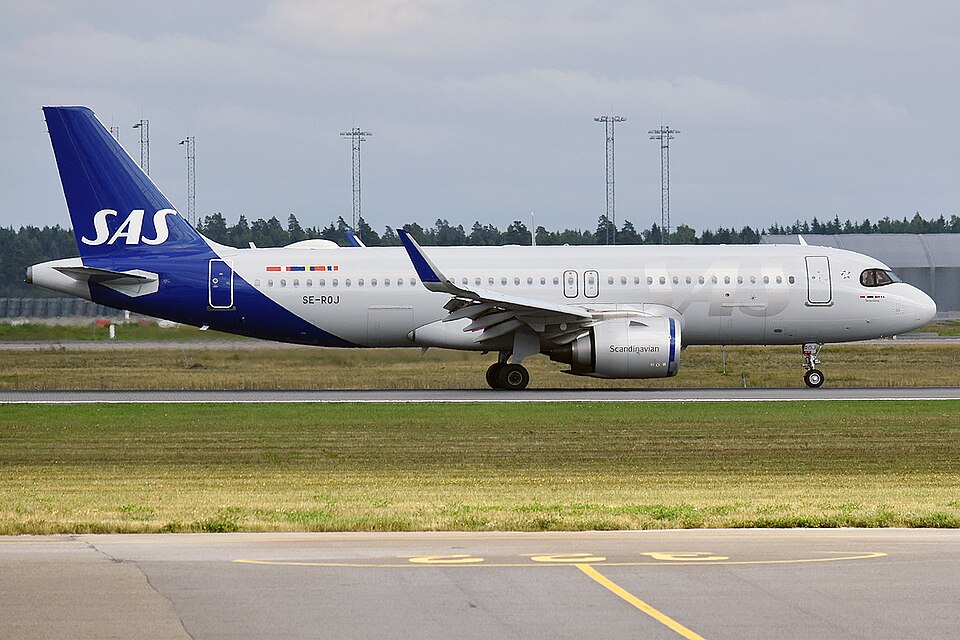
On September 4, 2021, an aircraft (registration SE-ROJ) was involved in an aviation accident near HR. Investigators recorded the probable cause as: A combination of aircraft handling during the final phase of landing and a significant change in wind direction and strength. This summary draws on records from the Air, Maritime and Railway Traffic Accident Investigation Agency of Croatia (AIN).
On 4 September 2021, an SAS Airbus A320neo (SE-ROJ) made a tailstrike during landing at Split Airport. No injuries were reported, and the aircraft sustained minor material damage.
Incident Overview On 4 September 2021, at approximately 10:34 UTC, an Airbus A320neo operated by SAS, registration SE-ROJ, experienced a tailstrike while landing at Split Airport (LDSP). The aircraft touched the runway with the lower part of the fuselage in the tail area. No physical injuries were reported among the 174 people on board, consisting of 6 crew members and 168 passengers. ## Aircraft and Flight Details The aircraft was an Airbus A320-251N NEO, serial number 9312, powered by CFM International LEAP-1A engines. The flight, designated SK7347, departed Bergen Airport at 07:46 UTC and proceeded without difficulty until the landing phase. The approach in use was ILS Z for runway 05. The crew was informed of a possible tailwind and the characteristics of the runway in the touchdown zone, which had an upward tendency. ## Damage and Investigation The tailstrike resulted in damage to the skin and other structural components between frames 68 and 72, and between stringers 32LH and 32RH. Additional damage was noted on the APU drain pipe and the rear galley drain pipe. The investigation determined that the serious incident was caused by a combination of aircraft handling during the final phase of landing and a significant change in wind direction and strength. The Croatian Agency for Investigation of Accidents in Air, Maritime and Rail Transport (AIN) did not issue any safety recommendations as a result of this investigation.
Probable cause
A combination of aircraft handling during the final phase of landing and a significant change in wind direction and strength.
An X-AIR HAWK ultralight crashed in Chonburi, Thailand, killing the pilot and injuring a passenger. The accident was caused by deteriorated wing fabric and…
A Challenger II Special ultralight aircraft (U-B23) landed off-runway at Pai Airport, Mae Hong Son, on September 17, 2024, due to a gust of wind. No injuries…
The Polish aviation safety authority is investigating a serious incident involving an AT-3R100 aircraft that occurred on September 2, 2024. The investigation…
A SZD-48-3 glider suffered damage when its left wing struck a ground obstacle during a low final approach at EPWK on June 20, 2025. The pilot was uninjured.
A 39-year-old skydiver died after a hard landing near Leszno on May 1, 2026. The PKBWL preliminary report indicates the fatal impact resulted from a late,…
A student pilot crashed an SZD-50-3 Puchacz glider into the airfield fence during a solo training flight on June 6, 2026. The pilot was uninjured, but the…