Incident Overview
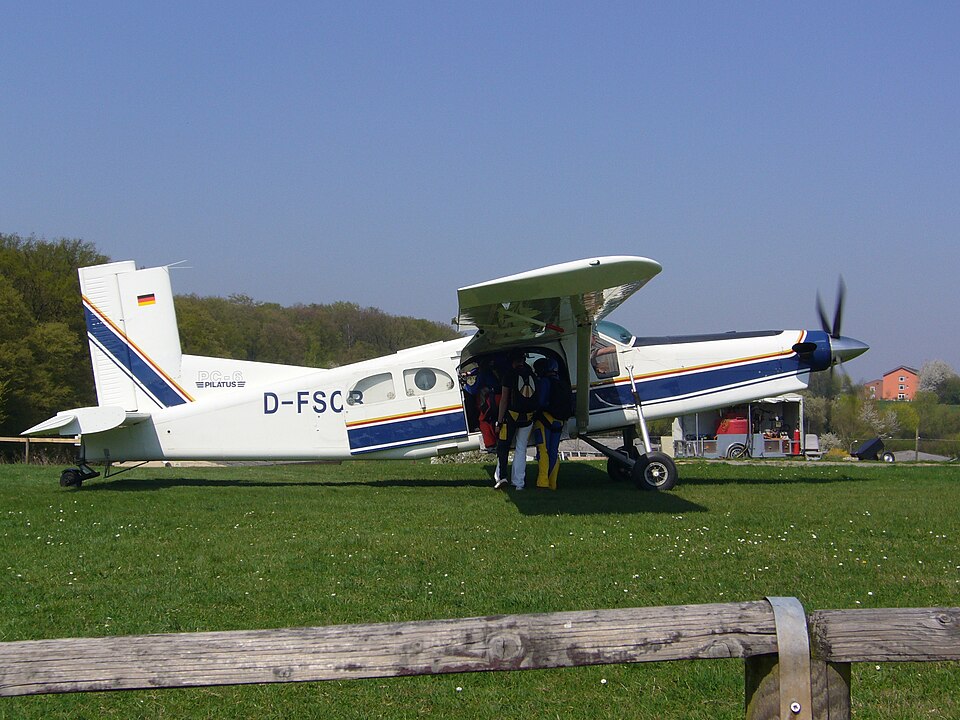
On the afternoon of June 19, 2016, a Pilatus PC-6 aircraft bearing the German registration DFSCB departed from Figueira dos Cavaleiros (LPFC). This was the seventeenth skydiving launch of the day. The aircraft carried eight individuals: one pilot, five skydivers, and two passengers engaged in tandem jumps with two of the skydivers.
Flight Conditions and Sequence of Events
Meteorological conditions were favorable, featuring clear skies, winds from 040° at 10 knots, and an air temperature of approximately 32°C. The aircraft initiated a climb to a target altitude of 14,500 feet at a rate of 1,000 feet per minute.
While crossing 7,000 feet above mean sea level, witnesses reported hearing a sound resembling the cracking or ripping of metal. Simultaneously, the aircraft experienced a sudden pitch-up to a high nose attitude and yawed to the right, leading to severe flight instability. The rear fuselage structure subsequently disintegrated completely.
Occupant Egress and Impact
Several occupants were pushed against the remaining airframe before being ejected. Skydivers who sustained minor injuries managed to exit the aircraft and deploy their parachutes manually. Two individuals suffered serious injuries prior to ejection; their emergency parachutes deployed automatically via barometric mechanisms. The pilot was ejected from the cockpit area but did not deploy a parachute, as such equipment is not standard procedure for this role. He struck the ground approximately 400 meters from the main cabin impact site.
Debris Field and Investigation Findings
Aircraft fragments were scattered over an area roughly 1,500 meters long and 500 meters wide, aligned with the west-to-east flight path. The official investigation determined that the probable cause was the fracture of the HT-trim attachment accessory. This failure rendered the horizontal stabilizer loose and uncontrolled, leading to vibration and the eventual fracture of the left side of the stabilizer.
Contributing factors included a failure in the inspection method by the Part 145 organization regarding critical parts identified in Service Bulletin 53-001 R1, as well as weaknesses in regulatory oversight by ANAC.