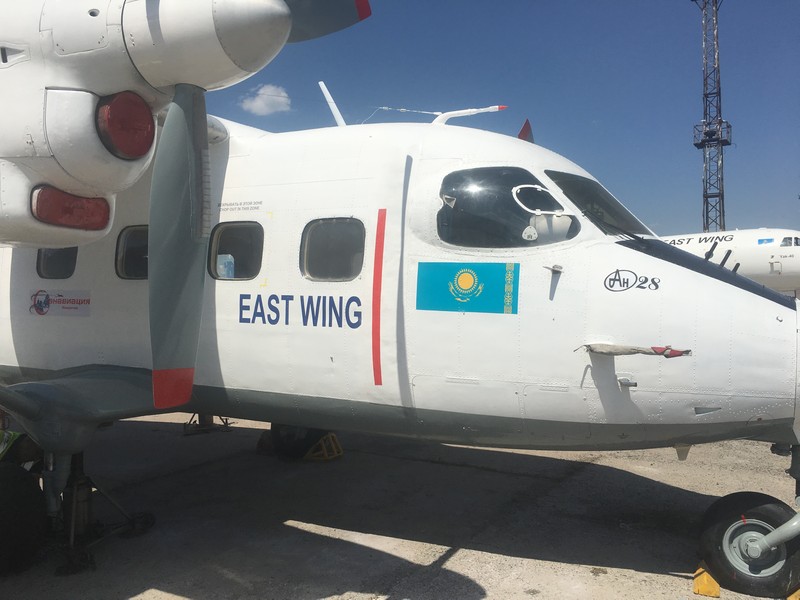
Accident Overview
On an ambulance flight from Almaty to Shymkent, a twin-engine airplane crashed near the village of Mezhdurechenskoye, approximately 28 km northwest of Almaty Airport. The aircraft was completely destroyed by impact forces and a post-crash fire. All five occupants—two pilots, two doctors, and one flight mechanic—were killed.
Sequence of Events
The flight departed Almaty Airport at 1835 local time. About 22 minutes into the flight, while cruising at night in poor weather conditions, the crew encountered an unexpected situation and was forced to shut down the right engine. Shortly thereafter, the aircraft crashed and burst into flames.
Probable Cause
The official investigation determined that the probable cause was the shutdown of the right engine and then the left engine, possibly due to faulty crew procedures. During the subsequent emergency descent with complete loss of engine power and no radio communication with air traffic controllers, the crew may have inadvertently failed to adjust the barometric altimeter pressure setting from 760 mm Hg to the landing airfield pressure of 704 mm Hg. This resulted in incorrect altitude readings. Although the crew later restarted the engines and attempted a forced landing, the incorrect altimeter readings (with the radio altimeter showing 750 m) led to the aircraft colliding with a power line, causing a fire, and then impacting the ground, resulting in the complete destruction of the aircraft.