Incident Overview
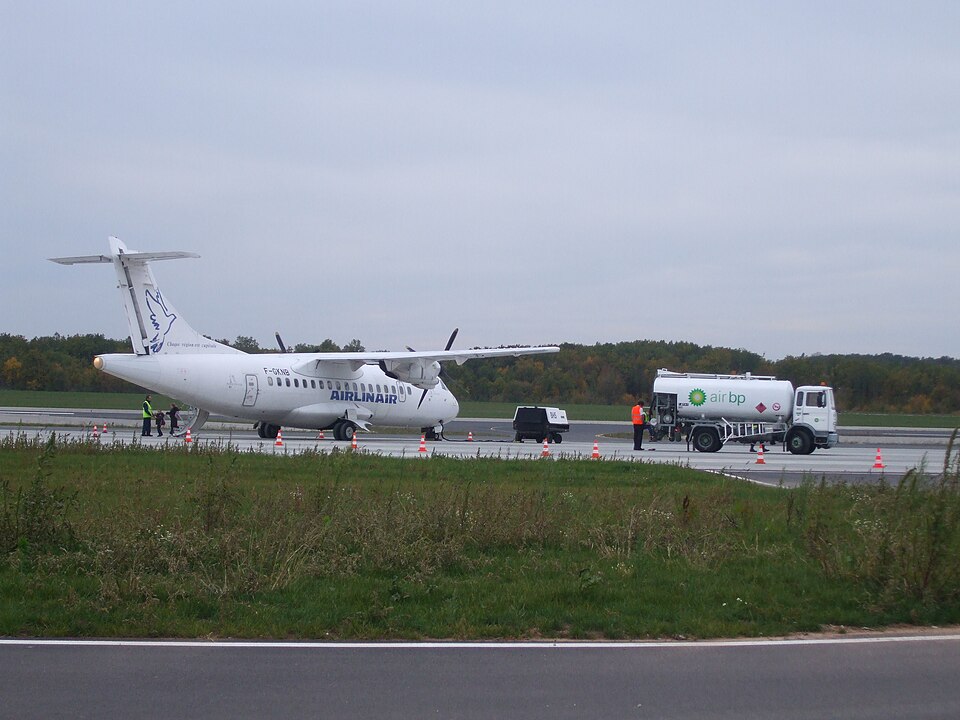
On June 1, 2010, at 09:17 UTC, a dangerous proximity occurred near Brive-la-Roche aerodrome in France. The event involved an Airlinair ATR 42-300, registration F-GKNB, operating a scheduled passenger flight to Paris-Orly, and a private Mooney M20 (M20), registration F-GNGG, arriving from Limoges. No injuries or damage were reported.
Sequence of Events
The ATR 42-300 crew initiated takeoff on runway 32 following company procedures that required a specific departure trajectory. Simultaneously, the Mooney pilot, who had departed Limoges, announced his position to the Aerodrome Flight Information Service (AFIS). The AFIS agent informed the Mooney pilot of the ATR's presence but did not provide traffic information to the ATR crew, as the Mooney was not yet in the aerodrome circuit.
During its climb, the ATR captain visually acquired the Mooney at approximately 1,200 feet and interrupted the ascent to descend slightly. The Mooney pilot, who had been monitoring the ATR, halted his descent. The Mooney passed slightly above and to the left of the ATR. Post-incident radio exchanges confirmed that the Mooney pilot had squawked code 7000 since leaving Limoges frequency.
Contributing Factors
The investigation identified several factors contributing to the incident. The Mooney pilot's separation strategy relied on maintaining visual contact and passing under the ATR, a plan that failed when the ATR crew altered their vertical trajectory. For the ATR crew, the report cites over-reliance on TCAS, late external surveillance, and difficulties in applying "see and avoid" principles during an instrument departure.
Technical Analysis
The Mooney was equipped with a transponder, but no TCAS alarm was generated on the ATR. Simulations indicated that while a Traffic Advisory (TA) might have been generated approximately 15 seconds before the closest point of approach, a Resolution Advisory (RA) would not have been issued because the ATR's barometric altitude was below the 1,100-foot threshold required for RA activation during climb. Post-incident tests revealed no malfunctions in either aircraft's TCAS or transponder systems.