Background
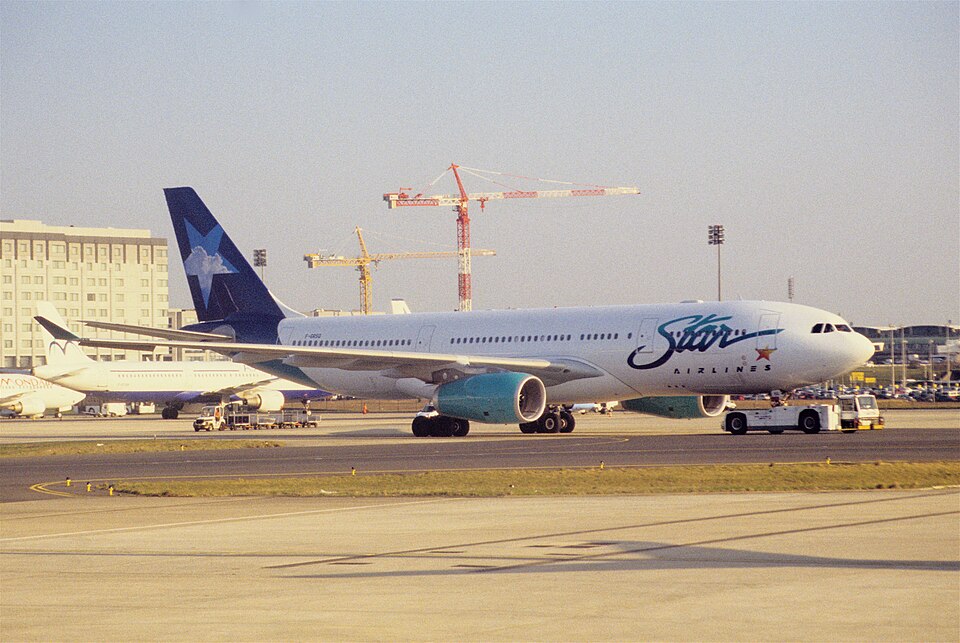
The incident involved Airbus A330 registered F-GRSQ, operated by XL Airways France on a commercial passenger flight from Saint-Denis de la Réunion to Marseilles. The aircraft was equipped with three identical Air Data Inertial Reference Units (ADIRUs) that provide attitude, heading, position, and other navigation data. The crew consisted of a captain and two first officers (FOs), with 10 cabin crew and 304 passengers on board. No injuries or damage occurred.
Flight Events
During preflight preparation, the crew learned that the previous crew had reported a drift of IRS 2. The first officer (FO-L) performed a complete alignment of all three IRSs. Takeoff occurred at 05:38 UTC. Shortly after departure, the crew saw the message "Check IR 2/FM position" on the Multipurpose Control and Display Unit (MCDU) and observed a drift of IRS 2, which they monitored throughout the flight, reading values between approximately 6 and 15 nautical miles. The GPS primary mode remained active during the first part of the flight.
At 10:34, IRS 3 transitioned from NAV mode to ATT mode, providing attitude data but no longer position or ground speed. The automated flight systems rejected IRS 3, but the loss of redundancy did not immediately affect navigation displays or require crew action. Around 13:00, the FO relieved the FO-L and became the pilot flying. Shortly after, while monitoring IRS 2 drift, the FO noticed IRS 3 was in ATT mode. The crew consulted the IR FAULT procedure and performed the IR ALIGNMENT IN ATT MODE for IRS 3, switching IRS 3 to ATT mode.
At 13:36, the flight directors, autopilot, and autothrust automatically disconnected. Position and flight plan data disappeared from the navigation displays. The crew activated BACK-UP NAV mode on their MCDUs, restoring position and flight plan data. However, the captain was unable to access valid IRS data or return to BACK-UP NAV after exiting it to check monitor pages.
At 13:44, each IRS recorded an "IN FLIGHT ALIGNMENT" message. The flight control law changed to direct law, and attitude data disappeared from the primary flight displays for the remainder of the flight. Position and flight plan data were no longer available. The crew relied on electromechanical standby instruments. They declared an emergency and diverted to Athens, landing at 14:37 on runway 03R. After landing, the aircraft systems were de-energized and re-energized, and all three IRSs were successfully aligned. The crew continued to Marseilles and then Paris Charles de Gaulle without further anomalies.
Technical Systems
The Airbus A330 ADIRS includes three ADIRUs controlled by a Mode Selector Unit (MSU) on the overhead panel. Only crew actions on the MSU can change an ADIRU mode. IRS alignment determines initial horizon, orientation, and latitude references. In-flight alignment of attitude and heading references is possible via the IR ALIGNMENT IN ATT MODE procedure, but navigation parameter reinitialization requires the aircraft to be stationary on the ground.
Aftermath
The aircraft's ADIRUs were removed shortly after the incident. No injuries or damage were reported. The investigation did not establish any crew errors or system malfunctions beyond the documented events.