History of the Flight
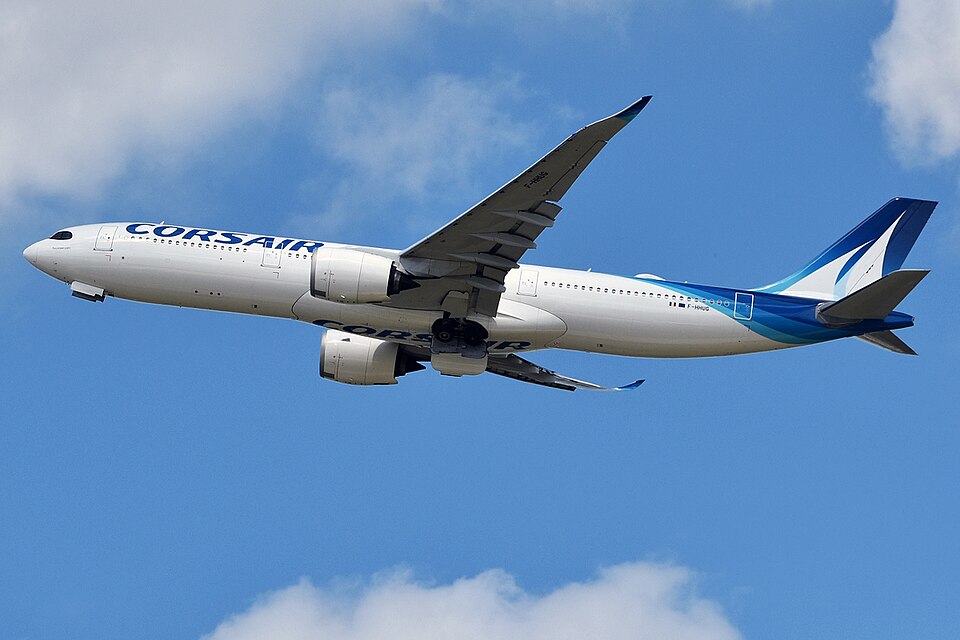
The flight, designated CRL925, departed Fort-de-France Airport at 23:19 UTC on 17 January 2022, destined for Paris-Orly. The crew consisted of a captain, a co-pilot, eight cabin crew members, and 284 passengers. The captain was the pilot flying (PF) and the co-pilot was the pilot monitoring (PM). At 23:27, at flight level FL130 during climb to FL380, the PF engaged autopilot 1.
Around 23:45, near FL300, the co-pilot noticed the captain appeared asleep and unresponsive to verbal calls and physical shaking. After two attempts, the co-pilot used emergency phraseology to summon the chief purser. Upon entry, the captain regained consciousness and reported feeling tired but fine. The aircraft was approximately 200 NM from Fort-de-France.
The chief purser applied moist compresses, measured vital signs (temperature, blood pressure, oxygen level, blood sugar), finding results normal except for a low oxygen level of 90%. The co-pilot inquired about intentions; the captain wished to continue. Oxygen was administered. The aircraft reached cruising level FL380, and the co-pilot assumed PF duties, engaging autopilot 2.
At 00:10, a passenger who was a gastroenterologist examined the captain, diagnosing a vasovagal episode requiring monitoring. The crew decided to continue, with the captain resting. The co-pilot prepared for possible diversion, obtaining weather information from the airline's Operations (OPS) service and from another Corsair flight (CRL927).
When woken, the captain responded normally but requested additional rest. Shortly before 02:00, his blood pressure dropped to 10/6 and oxygen level to 85%. The chief purser removed his epaulette stripes. After oxygen, the doctor recommended a lying position, but the captain refused and lay on the cockpit floor. The aircraft was roughly equidistant from Fort-de-France and Lajes, about 1,200 NM from each.
At 02:15, the captain showed signs of aphasia. The co-pilot contacted CRL927 for updated Lajes weather; they offered to coordinate with OPS. At 02:30, two neurologists among passengers examined the captain. At 02:50, the gastroenterologist suspected a stroke and recommended immediate landing. The co-pilot decided to divert to the Azores (Santa Maria or Lajes).
A cabin crew member volunteered to assist, sitting in the left seat. At 02:52, the co-pilot requested updated Lajes weather from CRL927 and indicated diversion. At 02:59, she sent a PAN message via ACARS to Santa Maria controller, applying oceanic contingency procedures (shift 5 NM right, descend 500 ft). At 03:10, Santa Maria contacted her; she declared a MAYDAY, stating "brain bleed". At 03:40, the chief purser informed passengers of the medical diversion. The captain moved to the observer seat.
At 04:00, the co-pilot announced the descent. After clearance, she conducted an ILS 15 approach and landed at Lajes at 04:35. The aircraft parked at 04:42 in a military zone. Emergency services attended the captain, who was hospitalized for several days.
Additional Information
Meteorological Conditions
Before take-off, the ATIS at Fort-de-France reported wind 080° at 6 kt, visibility 10 km, scattered clouds at 2,800 ft and 3,300 ft, temperature 25°C, QNH 1014 hPa. TAF for Lajes and Santiago were noted.
During flight, the co-pilot obtained ATIS for Antigua at midnight (good weather) and Lajes at 01:00 (rain, scattered clouds 500 ft, broken 1,400 ft). Santa Maria conditions were near minima. After diversion decision, conditions remained similar.
ACARS Printer Failure
The aircraft's ACARS printer had failed before the flight and was listed under the MEL. Pilots could not print weather updates; they contacted OPS via satellite telephone. Airbus noted that D-ATIS data could still be read on the MCDU, and text messages from OPS could be received via ACARS on the MCDU.