History of the Flight
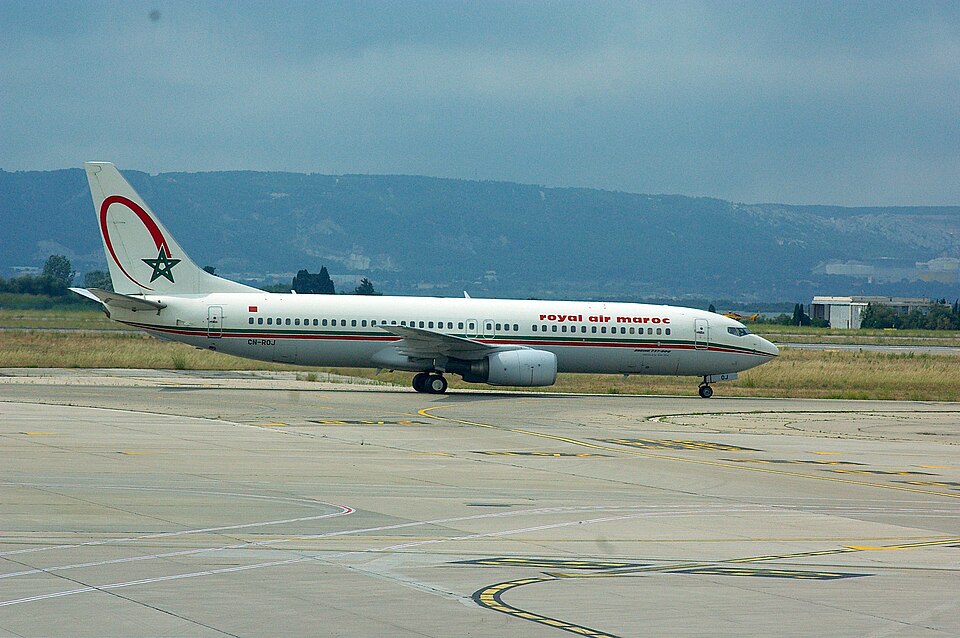
On 30 December 2016, a Boeing 737-800 operated by Royal Air Maroc was conducting a passenger flight from an undisclosed origin to Paris-Orly. The crew initiated a CAT III ILS approach to runway 06 at Paris-Orly. During the approach, the crew attempted to engage the second autopilot (A/P B) twice but failed due to the non-reception of radio-altimeter (RA) 2 data by the flight control computer (FCC B). This also caused the disengagement of A/P A. The crew re-engaged A/P A, informed air traffic control that they could not perform a CAT III approach, and requested a missed approach and diversion to Lyon-Saint Exupéry.
Diversion to Lyon
The aircraft diverted to Lyon-Saint Exupéry, where conditions permitted a CAT I ILS approach with only one autopilot. During the first approach to runway 35R, while intercepting the localizer in A/P intercept mode, the aircraft suddenly veered right with a bank angle of 30°, crossing and departing the localizer path. This was commanded by the autopilot due to erroneous data from the left Air Data Inertial Reference Unit (ADIRU). The invalidity of the left ADIRU data then led to the disengagement of A/P A. The captain flew manually with Flight Directors (F/D) displayed. The crew executed a missed approach and engaged A/P B.
IRS FAULT Warning
After transfer to Approach control, the L IRS FAULT warning activated, causing disengagement of A/P B and loss of pitch, roll, heading, and F/D bars on the left PFD. The captain manually performed the IRS Transfer Switch to BOTH ON R from memory, restoring data from the right ADIRU. During the second approach, after re-engaging A/P B and transferring controls to the co-pilot, the controller was informed of positioning problems. On capturing the glide slope, A/P B automatically disengaged due to FCC B not receiving RA 2 data. The F/D disappeared from both sides, and the co-pilot transferred controls back to the captain. The approach continued in manual flight without F/D.
Non-Stabilized Approach and Landing
The approach was not stabilized with respect to path, speed, or configuration. Several EGPWS warnings ("SINK RATE", "GLIDE SLOPE", "TOO LOW TERRAIN") activated on final. The aircraft emerged from cloud cover between runways 35L and 35R, performed a side-step, and landed on runway 35R.
Injuries and Damage
No injuries were reported among the 149 passengers, 4 cabin crew, and 2 flight crew. The aircraft sustained no damage.
Contributing Factors
The BEA identified several contributing factors: the concurrence of two independent failures; the crew's progressive loss of confidence and stress; deterioration in crew resource management; the FCC not monitoring inertial data; late activation of the IRS FAULT warning; non-systematic reporting of technical malfunctions; and persistence of intermittent faults. No single probable cause was stated.