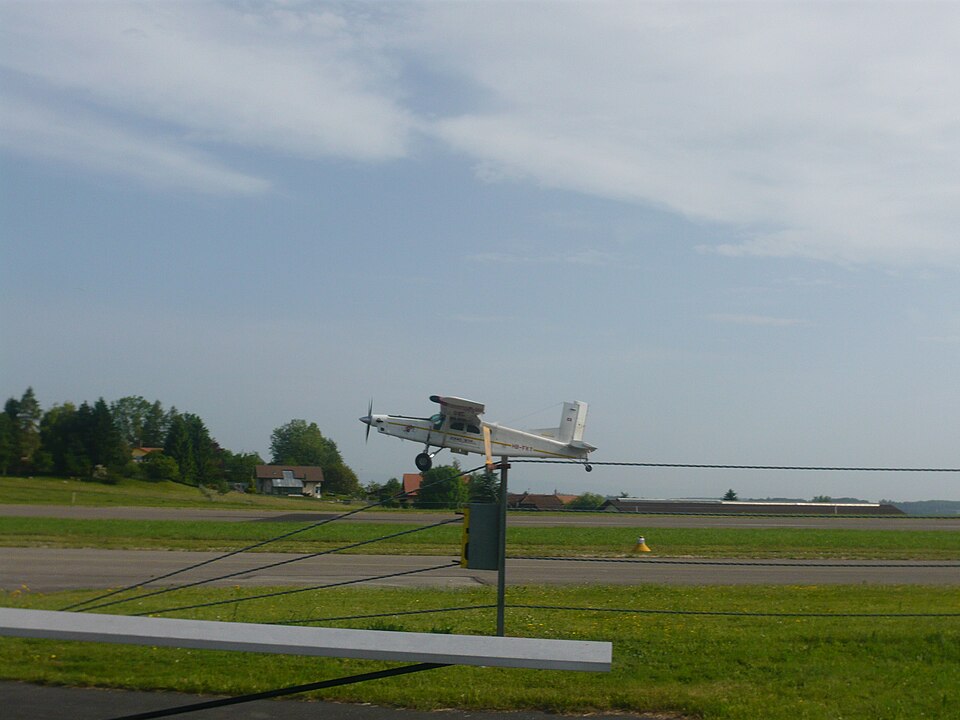
Accident Details
On 26 September 2014 at 11:40 local time, a Pilatus PC-6/B2-H4 (registration HB-FKT) operated by Flying Devil SA was landing on the mountain landing strip of Croix-de-Cœur, located in the municipality of Riddes, Valais, at an altitude of 2130 m. The pilot, a Swiss citizen born in 1946 holding a commercial pilot license (CPL(A)) with 5566 total flying hours (4652 on type, 112 in the last 90 days), described the landing as ideal. While taxiing downhill on the grassy surface at approximately 30 km/h, the pilot felt a strong impact on the left side of the aircraft. The impact caused the passenger-side windshield to crack.
Injuries and Damage
No serious injuries occurred. The pilot and seven passengers were reported as unharmed or slightly injured. The aircraft sustained damage to the left side of the airframe and the right (passenger side) windshield. No other property was damaged.
Aftermath
After parking, the pilot inspected the landing strip and discovered a deep depression about two meters from the left edge of the strip. This terrain irregularity was unknown to the pilot. Following a telephone consultation with the aircraft manufacturer, the pilot took off alone and flew the aircraft to Bex aerodrome. A bus was arranged to transport the passengers back.