Casualties unknown

EasyJet A319 Fume Incident Near Thessaloniki (HB-JYK)

Thessaloniki/Greece, CH

On May 30, 2017, an AIRBUS S.A.S. A319-111 (registration HB-JYK) was involved in an aviation accident near Thessaloniki/Greece, CH. This summary draws on records from the Swiss Transportation Safety Investigation Board (STSB / SUST).
Sourcesthe Swiss Transportation Safety Investigation Board (STSB / SUST)Primary reportUpdated 2026-09-13Data APIEditorial standards
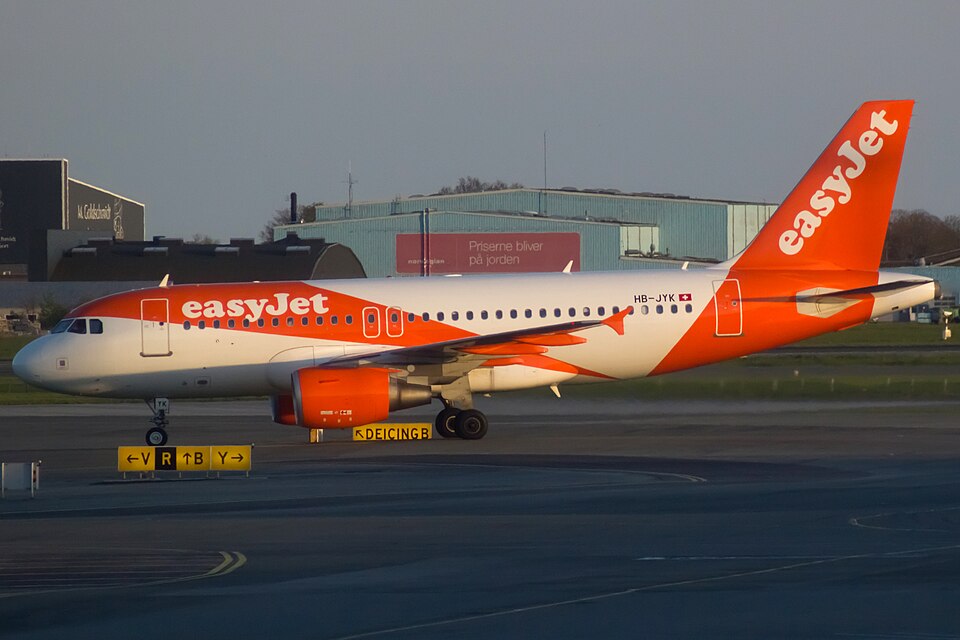
Aircraft registered HB-JYK
Aircraft registered HB-JYK. Photo: Bene Riobó / CC BY-SA 4.0, via Wikimedia Commons

On 30 May 2017, an EasyJet Airbus A319-111 (HB-JYK) encountered a fume event during cruise after departing Thessaloniki. The crew diverted back to the origin airport, where the aircraft landed safely with no injuries.

Incident Overview and Aircraft Details On 30 May 2017, an Airbus A319-111 operated by EasyJet Switzerland SA, registered as HB-JYK, was involved in a serious incident during a scheduled IFR flight from Thessaloniki (LGTS), Greece, to Basel (LFSB), Switzerland. The aircraft was owned by EasyJet Airline Company Limited. The flight crew consisted of a Dutch commander and a Swiss first officer, both holding EASA ATPL(A) licenses. ## Sequence of Events During the preceding flight into Thessaloniki, the senior cabin crew member reported a brief observation of haze and fumes in the cabin upon landing, which was initially attributed to hard braking. During the turnaround, no signs of a bird strike were found during the external walk-around. After take-off from runway 34 at 08:11 UTC, the flight crew noticed a strong stench at 7,000 ft AMSL, approximately three minutes after departure. The smell was described as similar to a dirty oven and was confirmed in the front galley. The crew initiated an emergency procedure for smoke and fumes, donning oxygen masks and declaring a Pan Pan urgency signal at 08:15:14 UTC, followed by a Mayday distress signal. The aircraft was diverted back to Thessaloniki. The pilot monitoring consulted the Quick Reference Handbook (QRH) and switched off air conditioning pack 1, which temporarily improved the situation. However, when the smell persisted and cabin crew reported headaches, the procedure was resumed, including switching off both packs and opening the ram air supply. ## Landing and Maintenance Findings The aircraft landed on runway 16 at 08:24:54 UTC with a landing mass of 60.8 tons. Post-landing checks by the fire brigade and a doctor found no signs of fire or smoke, and no medical treatment was required. The post-flight report recorded a VENT BLOWER FAULT at 08:16 UTC and an AIR PACK 1+2 FAULT three minutes later. The avionics blower fan assembly was replaced and sent to the manufacturer, where no failure was found. However, the report notes that the aircraft had experienced a series of fume events since joining the fleet in January 2016. Airbus identified the third-party supplied avionics blower fan as subject to premature failures, with a root cause linked to the quality of fan repairs leading to incorrect balancing or inadequate assembly. Mitigation actions included fan reliability improvements, the development of a Ball Bearing Health Monitoring (BBHM) function, and the introduction of a new avionics fan design.

Investigation report by the Swiss Transportation Safety Investigation Board (STSB / SUST). Original record: https://www.sust.admin.ch/inhalte/AV-berichte/HB-JYK.pdf. This page is a structured re-presentation; facts and quotes are in the Swiss Transportation Safety Investigation Board (STSB), Switzerland.