73 fatalities

1976-11-28: Tupolev TU-104 (CCCP-42471) — Aeroflot - Russian International Airlines — Moscow-Sheremetyevo, Russia

Moscow-Sheremetyevo, RussiaTakeoff (climb)

On November 28, 1976, a Tupolev TU-104 (registration CCCP-42471) operated by Aeroflot - Russian International Airlines was involved in an aviation accident near Moscow-Sheremetyevo, Russia during takeoff. 73 people were killed. Investigators recorded the probable cause as: Loss of control during initial climb after the crew suffered spatial disorientation in poor visibility due to the failure of the artificial horizon. This may be caused by the failure of the 36 volts electrical system. This summary draws on records from the Bureau of Aircraft Accidents Archives (B3A); 8 related events involving the same aircraft type or operator are linked below.

Sourcesthe Bureau of Aircraft Accidents Archives (B3A)Primary reportUpdated 1781228634Data APIEditorial standards
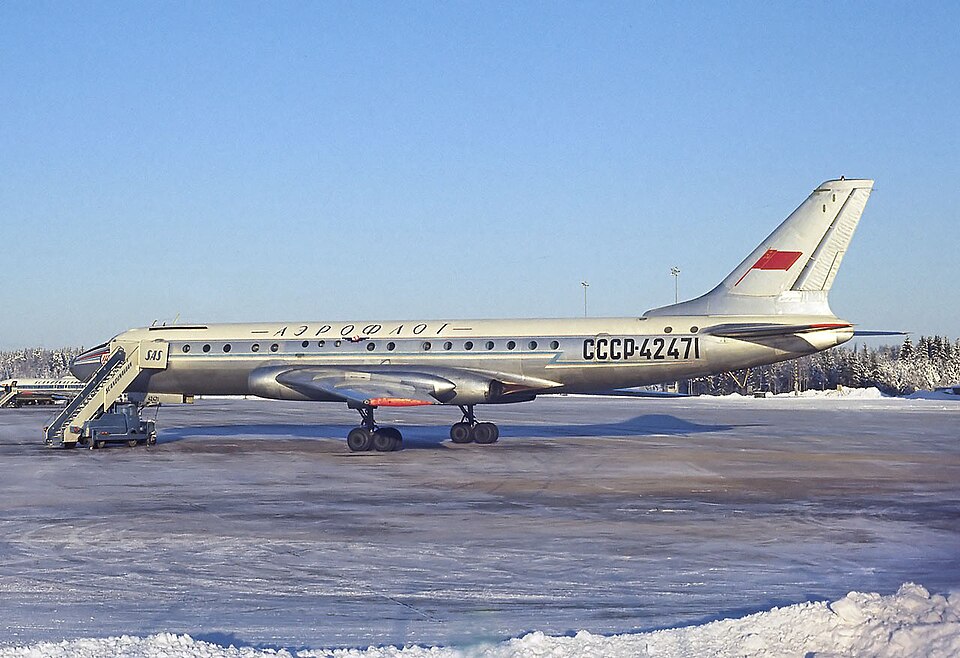
Aircraft registered CCCP-42471
Aircraft registered CCCP-42471. Photo: Lars Söderström / CC BY-SA 3.0, via Wikimedia Commons

Aircraft crashes near Klushino minutes after takeoff from runway 24R. Night and marginal weather, loss of control during climb. All 73 occupants killed. Probable cause: spatial disorientation due to artificial horizon failure.

Accident Details

The flight departed on a normal takeoff roll from runway 24R, with the copilot at the controls. The airplane lifted off at a speed of 290 km/h. Visibility was poor due to night conditions and marginal weather.

Less than a minute after takeoff, while climbing, the airplane rolled to the right to an angle of 60-70°, and airspeed increased to 580 km/h. The captain took over control as the airplane initiated an uncontrolled descent. The aircraft crashed at a speed of 620 km/h in a huge explosion near the village of Klushino, approximately 10 km northwest of the airport, three minutes after takeoff.

Impact and Casualties

The aircraft disintegrated on impact. All 73 occupants on board were killed.

Probable Cause

The official investigation determined the probable cause to be loss of control during initial climb after the crew suffered spatial disorientation in poor visibility due to the failure of the artificial horizon. This may have been caused by the failure of the 36-volt electrical system.