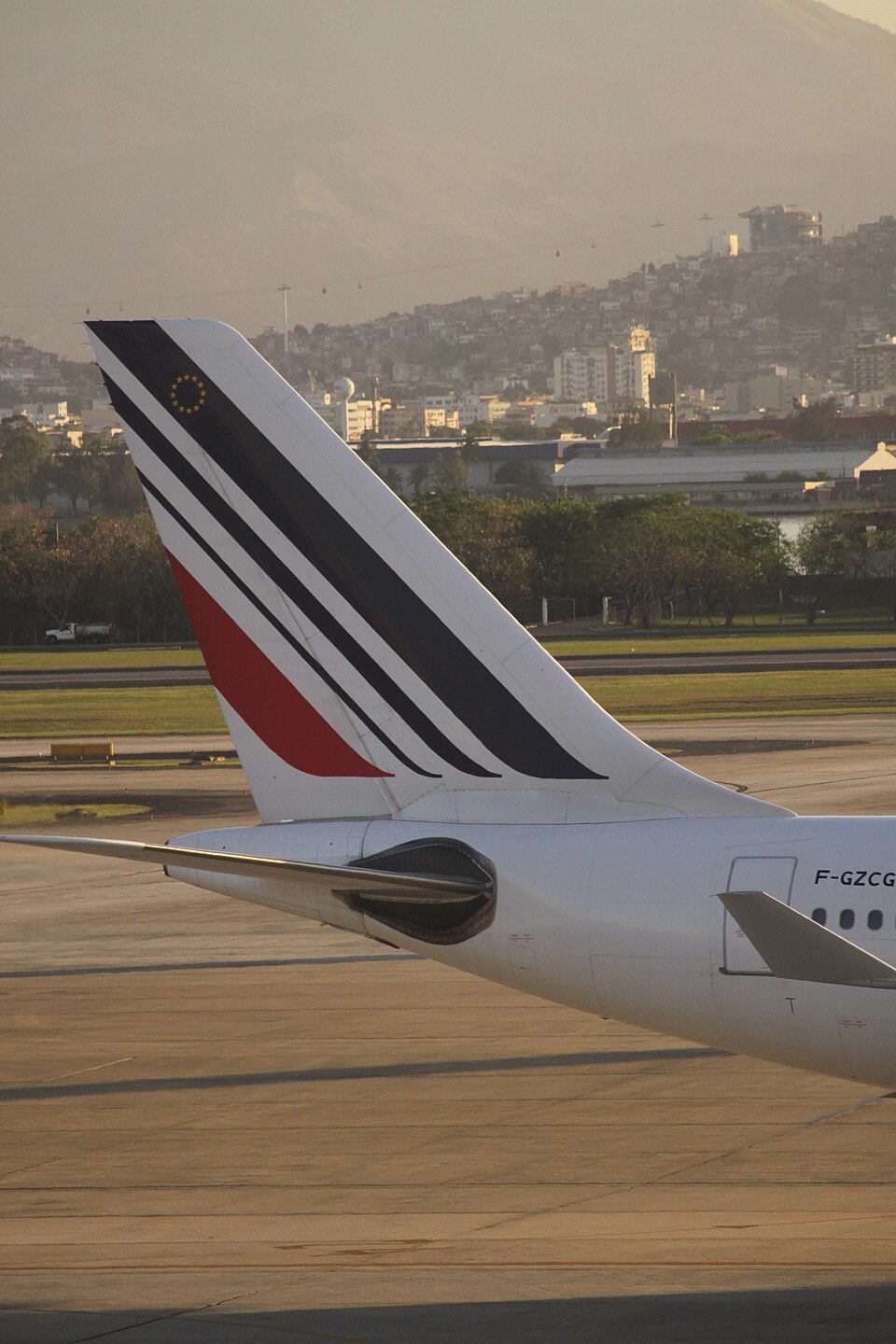
On February 27, 2012, an Airbus A330-200 (registration F-GZCG) operated by Air France was involved in an aviation accident near FR. No fatalities were reported. This summary draws on records from the French Bureau d'Enquêtes et d'Analyses (BEA); 8 related events involving the same aircraft type or operator are linked below.
On 27 February 2012, an Air France Airbus A330-200 (F-GZCG) encountered severe turbulence over Tanzania, causing momentary loss of control and minor injuries to a passenger and crew member.
Incident Overview and Flight Details On 27 February 2012, an Air France Airbus A330-200, registration F-GZCG, was operating a scheduled international passenger flight from Antananarivo, Madagascar, to Paris Charles de Gaulle. The aircraft departed at 22:45 UTC. At 00:48 UTC, while cruising at flight level 360 over Tanzania, the aircraft encountered severe turbulence, resulting in a momentary loss of control of the flight path. The incident caused minor injuries to one passenger and one cabin crew member. ## Flight Progression and Weather Information The crew received an ACARS message at 23:10 UTC describing satellite imagery from 22:30 UTC, indicating strongly convective zones up to 12°30' S latitude, followed by more isolated zones until point DV, and no turbulence expected until 2°30' S. The crew performed several evasive maneuvers while crossing the strongly convective zones. Ten minutes after passing 12°30' S, the pilot flying changed the navigation display scale from 40 NM to 160 NM. The crew reported clear skies with a view of the stars and adjusted the weather radar tilt to -1.5°, regularly varying the tilt and gain to monitor cells. ## Turbulence Encounter and Aircraft Response Approximately six minutes after passing point DV, the Mach number increased from 0.81. The pilot flying changed the navigation display scale to 80 NM and selected a tilt of -1.5°. The pilot observed a lightning flash and a cloud to the right of the aircraft, with no echo visible on the weather radar. The Mach number reached 0.83, and the crew selected Mach 0.8, then 0.78, deploying the speed brakes for about 15 seconds. The Mach number decreased to 0.79 before rising to approximately 0.82. The crew then observed a lightning flash directly ahead and experienced violent turbulence. The pilot not flying illuminated the seatbelt signs. During the turbulence, the angle of attack increased until the autopilot disengaged. The pilot flying announced “AP OFF” and took manual control. Throughout the crossing of the convective zone, the aircraft climbed despite the pilot flying’s primary pitch-down commands. The autopilot was re-engaged but automatically disengaged again, and the auto-thrust also disengaged automatically. The pilot not flying, observing the pilot flying’s heavy workload, decided to disengage the auto-thrust and select 90% N1, unaware that the system was already disengaged. The crew stabilized the aircraft at flight level 380, the maximum altitude reached during the turbulence, and began descending ten seconds later. The pilot flying re-engaged the autopilot, and the remainder of the flight proceeded without incident. ## Recorded Data and Aircraft Performance During the severe turbulence, which lasted approximately 40 seconds, the following parameters were recorded: - Longitudinal attitude varied from -6° to +11° - Mach number varied between 0.77 and 0.83 - Angle of attack ranged from -0.7° to +10.2° - Bank angle ranged from -16° to +31° - Vertical speed reached a maximum of approximately +8,500 ft/min - Vertical load factor ranged from +0.02 g to +2.28 g - Lateral load factor ranged from -0.16 g to +0.17 g - Flight director trend bars disappeared and reappeared multiple times - The pilot flying issued primarily pitch-down commands, including for ten consecutive seconds after autopilot disengagement The manufacturer stated that the aircraft remained within its flight envelope throughout the incident. ## Meteorological Analysis The incident occurred at night with no moonlight. Pre-departure weather information indicated isolated cumulonimbus clouds in the area where the turbulence occurred. A TEMSI chart from 00:00 UTC was available in the flight plan, showing the planned route. Infrared images from Meteosat 9, available every 15 minutes, showed that the area where the turbulence occurred was scanned by the satellite at 00:36 UTC (for the 00:45 UTC image) and at 00:51 UTC (for the 01:00 UTC image). The 00:36 UTC image showed cloud tops around flight levels 280/300, with the cell likely forming but not yet detectable by radar. The 00:51 UTC image showed cloud tops between flight levels 360 and 450, indicating that the convective cell, though relatively small, was not visible on the 00:45 UTC image but was easily detectable on the 01:00 UTC image. This represented a particularly rapid evolution of an isolated thunderstorm cell. The cell’s subsequent development into a large convective complex suggested the presence of strong updrafts and severe turbulence. The rapid growth of the cell may have explained the violent phenomena encountered, which were related to the cell’s dynamism rather than its size. ## Weather Radar System The weather radar is designed to detect liquid water (rain or wet hail) and has difficulty detecting solid water forms such as ice crystals or dry snow. The image displayed on the navigation display depends on three parameters: gain, tilt, and navigation display scale. The tilt setting determines the area traversed by the radar beam; any cloud ahead of the aircraft but not intersected by the beam remains invisible to the radar. The gain setting allows adaptation to the reflectivity of precipitation areas encountered. F-GZCG was equipped with a manual Rockwell Collins weather radar, for which the tilt setting is common to both navigation displays and therefore unique. On this type of radar, the tilt must be adapted to the navigation display scale. In cruise, it should be set so that ground echoes appear only at the limits of the most distant distance circles. An Airbus information bulletin provides approximate values to use in cruise based on the scale: - 320 NM scale: -1.0° tilt - 160 NM scale: -1.5° tilt - 80 NM scale: -3.5° tilt - 40 NM scale: -6.0° tilt The operator’s instructions recommend using a 160 NM navigation display scale in cruise.