Introduction
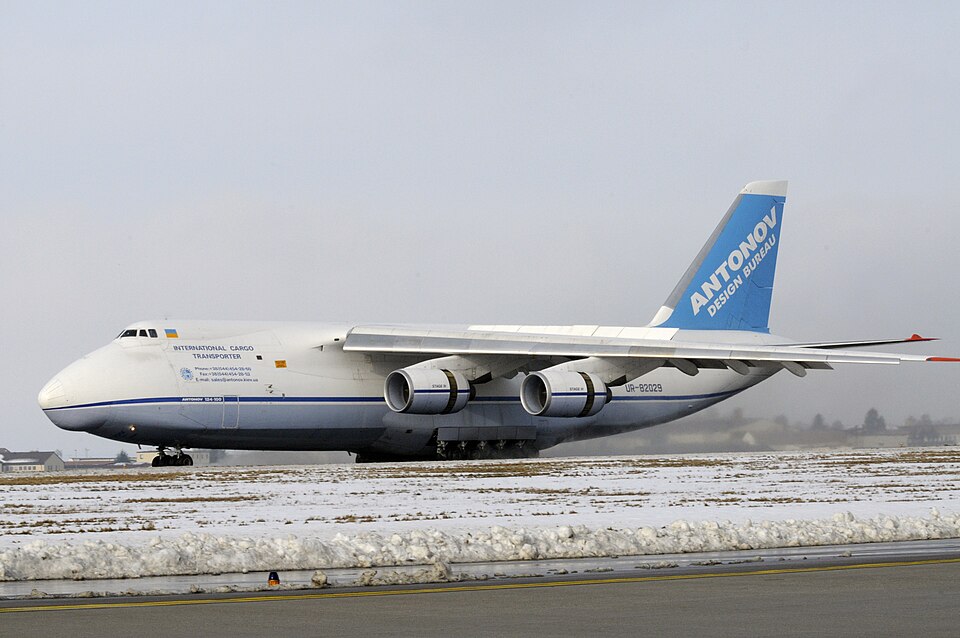
On 18 June 2003, an Antonov An-124-100 cargo aircraft, registration UR-82029, sustained a nose landing gear failure while taxiing at Rome Fiumicino Airport (Leonardo da Vinci). The aircraft, operated by State Enterprise Antonov Design Bureau, was preparing for a cargo flight to Basra, Iraq. The incident occurred at approximately 24:00 UTC.
Aircraft and Crew
The four-engine turbofan high-wing aircraft was built in 1991 with serial number 19530502630. It was registered in Ukraine on 10 April 1998 and held a valid airworthiness certificate. The flight crew consisted of six members: a 55-year-old male commander, a 29-year-old male first officer, a 39-year-old male navigator, two flight engineers (aged 46 and 36), and a 50-year-old radio operator. All crew members were Ukrainian nationals with valid licenses.
Event Description
After completing cargo loading at stand W5, the aircraft taxied to the runway via the apron and taxiway V. During a right turn to enter taxiway A, the right strut of the nose landing gear failed. The crew applied the stopping procedure, bringing the aircraft to a halt at the intersection of taxiways V and A. The aircraft's position blocked these taxiways for approximately 20 hours. There were 21 persons on board (flight crew and support crew); no injuries were reported. The breakage caused the right nose strut to detach, slight damage to the fuselage in the gear bay, and light abrasions to the taxiway surface.
Post-accident Actions
During the night and following morning, the cargo was unloaded. The crew removed the damaged strut and configured the aircraft for a ferry flight without cargo, with the landing gear extended, the right nose strut missing, and the right nose door removed. The local aviation authority (ENAC-DCA Rome Fiumicino) did not authorize an immediate departure because the flight manual was written only in Ukrainian, preventing a proper evaluation of the aircraft's airworthiness. ENAC requested English-language manuals and conducted a technical inspection. In the late afternoon, the aircraft was moved under its own power to a suitable parking area. After a technical check and receipt of adequate manuals, ENAC authorized the ferry flight to Kiev.
Investigation Findings
An investigator from the Italian aviation safety agency examined the aircraft on 19 June 2003 after it had been unloaded and reconfigured. The right nose gear strut had been removed and placed in the cargo hold along with the right door. Examination revealed that the right rotation arm had detached, exhibiting a circular fracture surface. The left fuselage support for the strut was deformed and damaged, while the right support was intact but retained the broken stub of the rotation arm. The actuation jack was disconnected and temporarily secured with ropes. Hydraulic and electrical lines were disconnected and temporarily attached to the structure. Hydraulic oil was present on the asphalt beneath the gear bay, and light asphalt damage was observed near the nose wheels. The investigator requested the removal of the rotation arm stub for further detailed examination. The report does not state a probable cause for the failure.