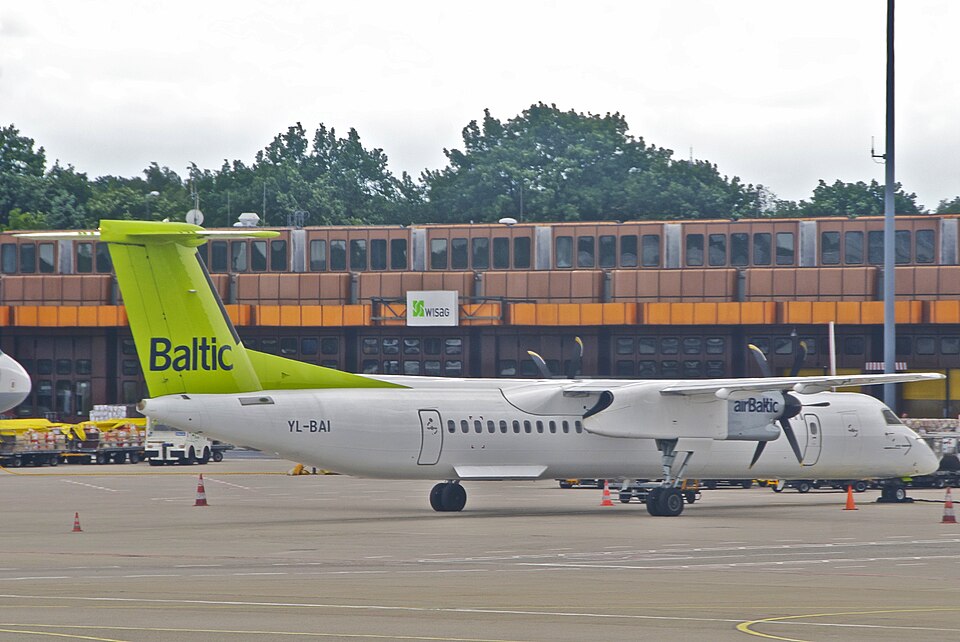
History of the Flight
The crew arrived at the aircraft at approximately 04:10 UTC and conducted pre-flight checks, which were normal. During taxi at 04:57, clearance was obtained for runway 18, and the aircraft departed from intersection E. Takeoff occurred at 05:04 UTC. After lift-off, when the landing gear was selected up, the main landing gear retracted normally, but the nose landing gear (NLG) unsafe light (red) and the nose door light (yellow) remained illuminated on the cockpit advisory panel. There was no master caution ‘LDG GEAR INOP’ light.
The pilot monitoring contacted approach control at approximately 2,500 feet, requested to stop climb at 4,000 feet, and informed ATC of the landing gear issue. The crew proceeded to the REKBI holding point and climbed to 5,000 feet as instructed. While in holding, they reviewed the non-normal checklists and Quick Reference Handbook (QRH) procedures for alternate landing gear extension and nose gear door malfunctions. They performed the alternate gear extension procedure, which resulted in the main landing gear extending and locking, but the NLG remained in the same unsafe condition.
At 05:32 UTC, ATC asked if the crew would declare an emergency. The crew responded that they would not yet declare an emergency but would perform a low pass to allow a technician to visually check the NLG position. At 06:33 UTC, the captain informed the tower that they intended to conduct a low pass in six minutes, then land. The crew prepared for an emergency landing, including briefing the senior cabin crew and passengers.
Emergency Landing and Aftermath
The aircraft landed safely on runway 18 at Riga International Airport with the NLG partially deployed at the position where it had become stuck. The landing was smooth with flaps 35 and maximum propeller RPM. After touchdown, the nose wheel began to rotate, and upon weight on wheels, the NLG collapsed. The aircraft came to a stop on the runway. Evacuation services and ATC were advised immediately. The aircraft was subsequently removed from the runway.
Aircraft Information
The aircraft was a Bombardier DHC-8-402 (Q400), registration YL-BAI, manufactured in 2010 and operated by Air Baltic Corporation JSC. It was on a scheduled international flight from Riga to Zürich. The aircraft carried 63 passengers and 4 crew members. The landing gear system description notes that the NLG retraction and extension involve a drag strut assembly with a locking mechanism that includes lower lock link bushings.
Investigation
The Transport Accident Incident Investigation Bureau (TAIIB) of Latvia conducted the investigation. The investigation focused on the drag strut assembly of the NLG. It was found that the lower lock link bushing had insufficient retention, which allowed the sealant in the joint to break. This permitted moisture and runway de-icing chemicals to penetrate the joint, leading to corrosion of the lower lock link hole and wear of the bushing outer diameter. The resulting excessive clearance decreased the total distance between the turning points of the locking mechanism, allowing the NLG to jam in an unlocked position.
No injuries to persons were reported in the source. The aircraft sustained damage to the NLG and related components.
Causes
The investigation determined that the direct cause of the serious incident was insufficient retention of the drag strut assembly lower lock link bushing, leading to sealant breach, moisture intrusion, corrosion, and eventual jamming of the nose landing gear.