What happened
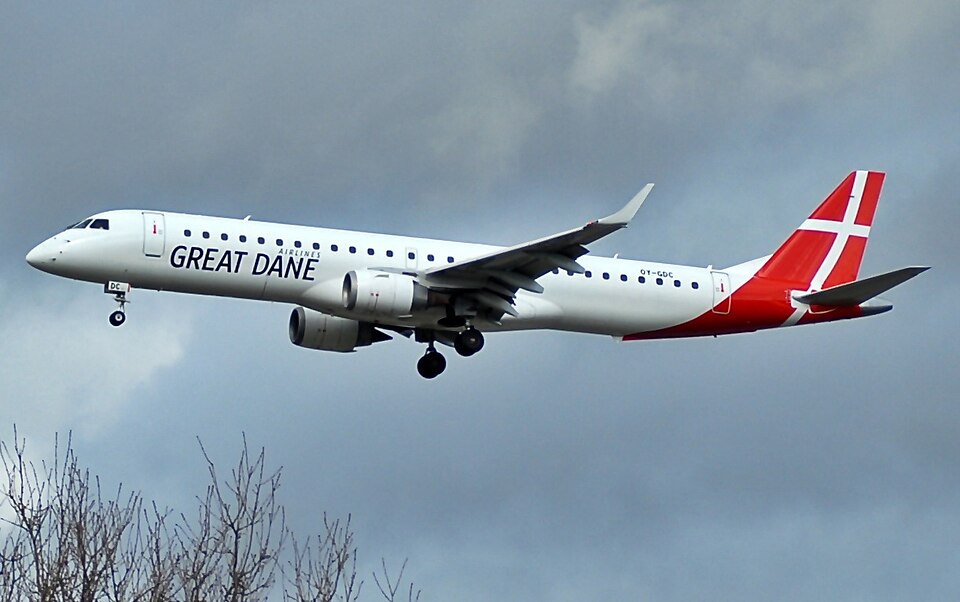
On February 18, 2024, a Magarpop Airlines Embraer E190-200V (EMB-195 GV), registered OU-COS, was operating flight LJ324 from Belgrade Nikola Tesla Airport to Düsseldorf. The aircraft had previously completed a round-trip to Vienna without incident and was preparing for its next leg. The crew initially planned to depart from runway 06/24 but received taxi instructions to hold short at intersection 06, which led to confusion regarding their actual position.
Air traffic control (ATC) urgently informed the crew that they had entered runway 05/23 and that only 1,273 meters of usable runway remained for takeoff from that intersection. The crew requested time to recalculate performance parameters using a manual flight computer. After confirming with ATC that they could safely depart from intersection 05, they received clearance for takeoff in the direction of 300 degrees (runway 06/24).
At 16:38 UTC, the aircraft began its takeoff roll. The crew reported feeling unusual vibrations and heard a loud impact shortly after leaving the paved surface. The cabin crew noted strong vibrations just before liftoff, consistent with crossing uneven terrain. As the aircraft rotated, it struck an object on the ground. Immediately after becoming airborne, the crew experienced system warnings related to flaps and engine bleed air, along with a loss of lights on the left wing.
The crew declared a mayday due to uncertainty about the nature of the impact and potential structural damage. They performed two low passes over the runway to inspect the landing gear, which appeared intact. The aircraft then landed safely at Belgrade without further issues, though fuel was leaking from the left wing upon stopping. Emergency services responded immediately to contain the fuel spill.
The investigation
CINS investigators examined the accident site and the aircraft. They found that the aircraft had taken off from the unpaved shoulder beyond the end of runway 06/24. The nose gear briefly lifted off at the end of the pavement but struck the control boxes of the approach lighting system. The main landing gear wheels continued onto the unpaved ground, transmitting vibrations to the airframe.
During rotation, the fuselage and the root of the left wing struck a steel monitor antenna for the Instrument Landing System (ILS). The impact broke the 5-meter antenna from its concrete foundation, which then fell into a hole dug in the earth. The antenna caused significant damage to the left horizontal stabilizer's leading edge and penetrated the aircraft's skin, with debris lodged inside the wing root and fuselage structure.
The antenna was found approximately 90 meters from the foundation, bent at the top. No tracks from the nose gear were found beyond the runway end, confirming it had lifted off before striking the lighting system. The main gear tracks were visible on the ground past the approach lights but before the antenna base. The investigation confirmed no mechanical failures with the engines or other systems prior to the collision.
Findings
The primary factor contributing to this accident was the inadequate assessment of takeoff performance parameters by the flight crew during pre-flight planning. Specifically, the crew failed to accurately calculate whether the available runway length from intersection 05 was sufficient for their aircraft weight and conditions. This miscalculation led them to proceed with a takeoff from a position where the nose gear would strike ground obstacles (approach lighting) and the fuselage/wing root would strike the ILS antenna upon rotation.
The crew's decision to continue the takeoff after realizing they were short on runway length, based on optimistic manual calculations, resulted in the aircraft leaving the paved surface prematurely. The collision with the ILS antenna caused substantial structural damage to the left wing and fuselage, necessitating a safe return but preventing further flight.
Safety action
CINS did not issue any safety recommendations following the conclusion of this investigation.