Introduction
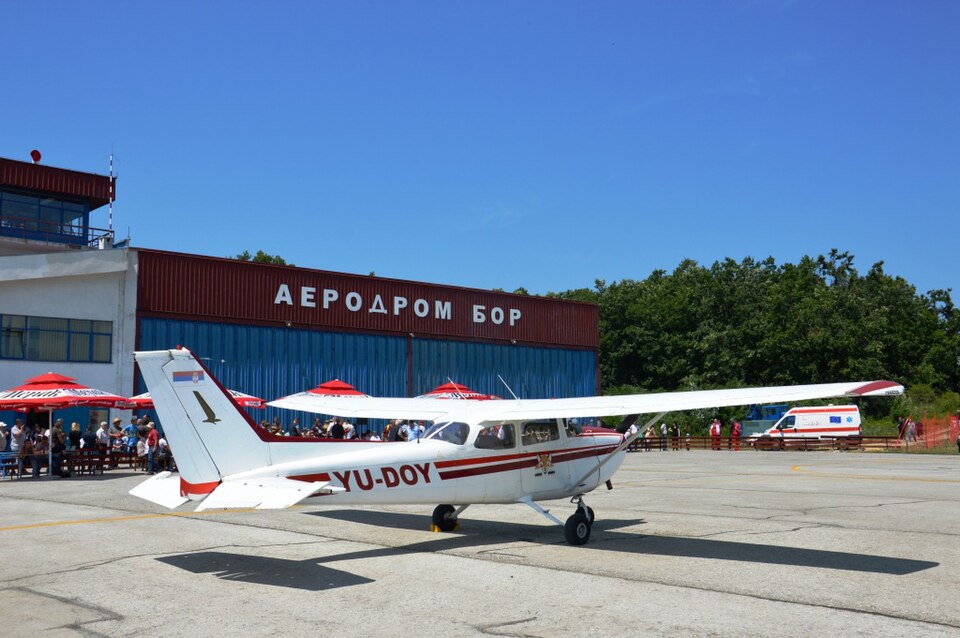
On August 14, 2017, a Cessna 172M, registration YU-DOY, was involved in a serious incident at Rudine Airport (LYSP) near Smederevska Palanka, Serbia. The aircraft was being used for training flights by ATO "Aero Monde." The investigation was conducted by the Serbian Centre for Transport Accident Investigation.
History of Flight
The student pilot, authorized as a student pilot on June 14, 2017, had accumulated 18 hours and 27 minutes of flight time. After completing two exercises covering eight flights, the flight instructor assessed the student as ready for a first solo flight. The student departed at 18:18 local time. The takeoff and initial climb to the third turn of the traffic pattern proceeded normally. However, after exiting the third turn, a noticeable increase in descent angle and deviation from prescribed flight parameters occurred. The student entered the fourth turn late and subsequently aligned for landing late. The flight instructor attempted to provide corrective instructions via radio, but the student did not acknowledge or respond. The aircraft was flown in the final approach with varying approach angles, resulting in a higher-than-appropriate speed and steeper approach angle. Inadequate control inputs led the aircraft over the threshold of Runway 29 at a high speed and nose-down attitude, without proper flare or deceleration. The nosewheel struck the ground approximately 250 meters from the runway threshold. The impact caused the nosewheel to collapse, and the aircraft bounced to a height of about four meters. After a brief flight, the student pilot landed the aircraft on the main landing gear, decelerated, and came to a stop about 200 meters from the initial impact point. The student then shut down the engine, switched off systems, and exited the aircraft uninjured.
Injuries
No injuries occurred to the pilot or any other persons.
Aircraft Damage
The aircraft sustained serious damage, including collapse of the nose landing gear, bending of the propeller, and damage to the lower engine cowling. No third-party damage occurred.
Meteorological Information
Weather conditions were favorable for the planned flight. Winds were from the north at up to 5 m/s, visibility was over 10 km, and no significant cloud cover was present. Weather was not considered a factor in the incident.
Analysis
The student pilot failed to maintain proper control during the final approach and landing. Despite corrective instructions from the flight instructor, the student did not adjust the approach path or speed. The nose-first impact with the ground resulted from inadequate flare and speed management. The nose landing gear, not designed for such loads, failed upon impact. The student regained some control after the bounce, landing on the main gear and stopping safely.
Conclusions
Findings
- The student pilot was properly authorized and current.
- The aircraft was airworthy with a valid certificate of airworthiness.
- Weather conditions were suitable for the flight.
- The student pilot did not follow the prescribed approach and landing procedures.
- The flight instructor attempted to provide guidance but was not acknowledged.
Probable Cause
The serious incident was caused by inadequate control inputs by the student pilot in the final phase of flight, resulting in an uncontrolled contact with the ground.
Probable Cause
Inadequate control inputs by the student pilot in the final phase of flight, resulting in an uncontrolled contact with the ground.