What happened
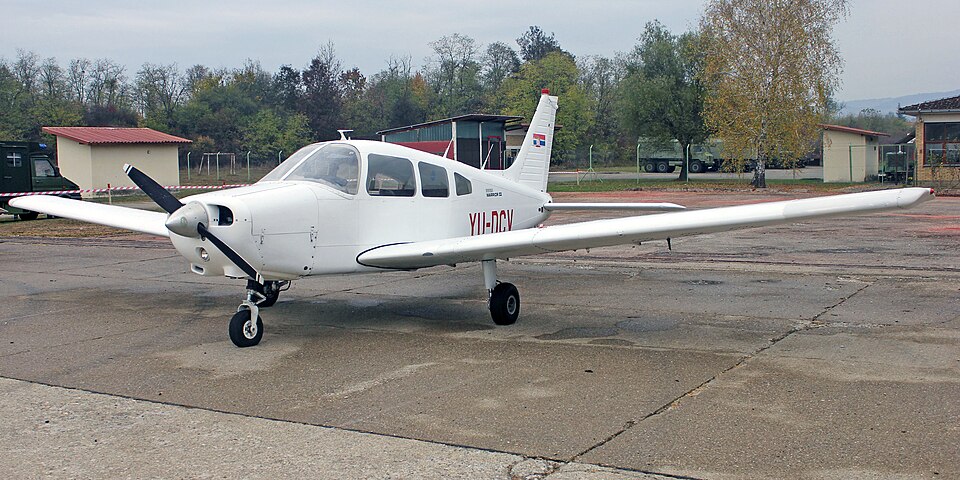
On September 26, 2009, at Trstenik Airport, an aircraft mechanic was performing a pre-flight inspection on a PIPER PA-28-161 WARRIOR, registration YU-DCV. During the inspection, the mechanic entered the cockpit to check the engine and brakes. After an initial attempt to start the engine via the electric starter failed due to a faulty starter motor, the mechanic exited the aircraft to manually rotate the propeller by approximately 20 centimeters to change the position of the flywheel.
Crucially, the mechanic left the right magneto switch in the 'on' position and the throttle set at one-third travel. The manual rotation of the propeller provided enough suction to draw fuel into the cylinders, resulting in an uncontrolled engine start. Because the aircraft was not secured with chocks, the engine's power caused the aircraft to begin taxiing without a pilot in the cockpit. The mechanic attempted to jump onto the wing to reach the cockpit and close the throttle, but was unable to do so through the aircraft door and fell to the ground.
As the aircraft accelerated along the taxiway, a glider flight controller, believing the aircraft was part of a planned towing operation, instructed the aircraft to clear the runway. The unmanned aircraft crossed the runway, entered a cornfield, and struck vegetation with the propeller and wingtips. The nose gear subsequently struck the edge of a shallow ditch, causing the aircraft to strike the ground with both wings. The engine stopped after the propeller made contact with the earth.
The investigation
The investigation focused on the sequence of events during the pre-flight inspection and the mechanical state of the aircraft. Investigators examined the engine, specifically the LYCOMING O-320-D3G, and the cockpit controls. The inspection confirmed that the right magneto switch was left in the 'R' position rather than 'OFF', and the throttle remained at one-third travel. The investigation also verified that the aircraft's battery switch was 'ON' and that no wheel chocks had been deployed. The investigation concluded that the engine start was an unintended consequence of the manual propeller movement under specific ignition and throttle settings.
Findings
- The direct cause of the accident was the mechanic's deviation from standard pre-flight inspection procedures regarding engine starting protocols.
- The mechanic failed to follow the established maintenance program procedures for engine start-up.
- The aircraft was not secured with chocks prior to the engine start attempt.
- The mechanic unintentionally left the right magneto engaged and the throttle at one-third travel.
- A contributing factor was the operator's acceptance of certain technical deviations as normal, which prevented the timely repair of the faulty starter motor.