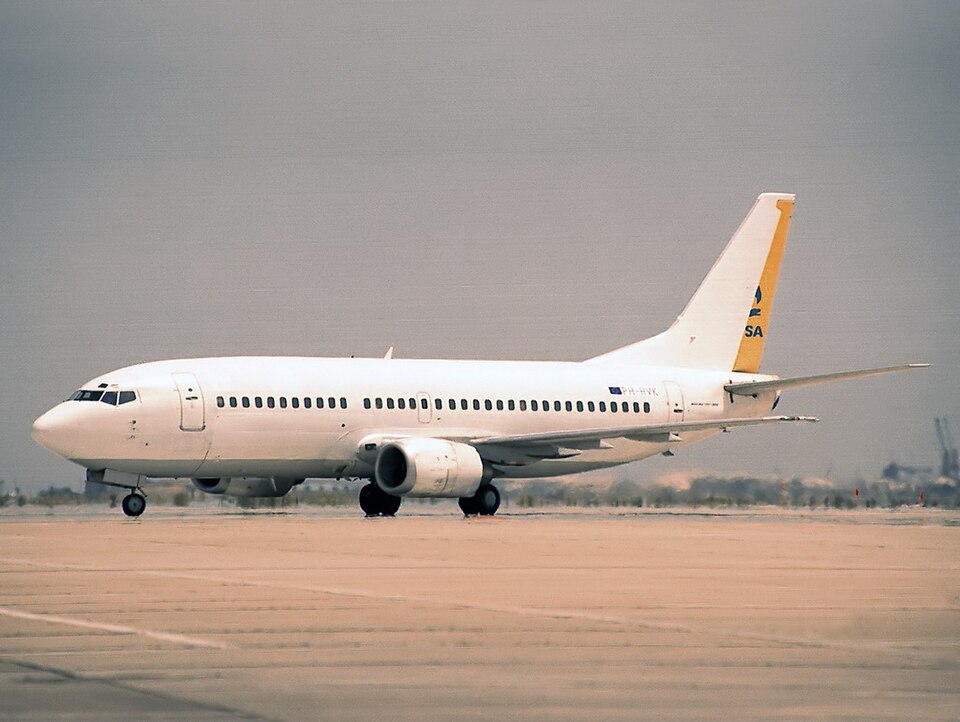
Synopsis
On 31 March 1989, at Lisbon Airport, a Boeing 737-300 operated by Transavia Holland, registration PH-HVK, performed a run-up test of its right engine. The test was conducted on taxiway L03, as authorized by airport services. During the procedure, the asphalt pavement disintegrated over a large area behind the right engine. Large pieces of asphalt were projected approximately 100 meters, striking the aircraft and causing damage.
Aircraft and Crew
The aircraft was a Boeing 737-300, registration PH-HVK, operated by Transavia Holland. The pilot in command was a male Dutch national holding an Airline Transport Pilot License. No crew or passengers were injured.
Damage
The aircraft sustained the following damage: holes and dents in the horizontal stabilizer and elevator; dents in the rudder; and dents on the right side of the fuselage.
Analysis
The aircraft had recently undergone replacement of its right engine in Lisbon. Authorization was given by airport services to perform the engine run-up test on taxiway L03. During the test, the asphalt broke apart over a wide area behind the right engine. The engine thrust projected large chunks of asphalt about 100 meters, which then impacted the aircraft, causing the documented damage.
Conclusion
The accident occurred due to the inadequacy of the location for engine run-up tests.
Recommendation
The report recommended that Lisbon Airport should be provided with an appropriate location for engine run-up tests.