78 fatalities

Scheduled Flight from Washington to Fort Lauderdale Strikes Bridge and Plunges into Frozen River (N62AF)

Washington, DC, US

On January 13, 1982, a Boeing 737-222 (registration N62AF) operated by Air Florida, Inc was involved in an aviation accident near Washington, DC. 78 people were killed. Investigators recorded the probable cause as: Engine inlet pressure probes blocked with ice, resulting in erroneous EPR indications; possibility of pitchup due to snow/ice frozen on wings; lack of runway distance markers; crew limited cold weather operational experience. This summary draws on records from the U.S. National Transportation Safety Board (NTSB) historical archive.

Sourcesthe U.S. National Transportation Safety Board (NTSB) historical archivePrimary reportUpdated 2026-07-04Data APIEditorial standards
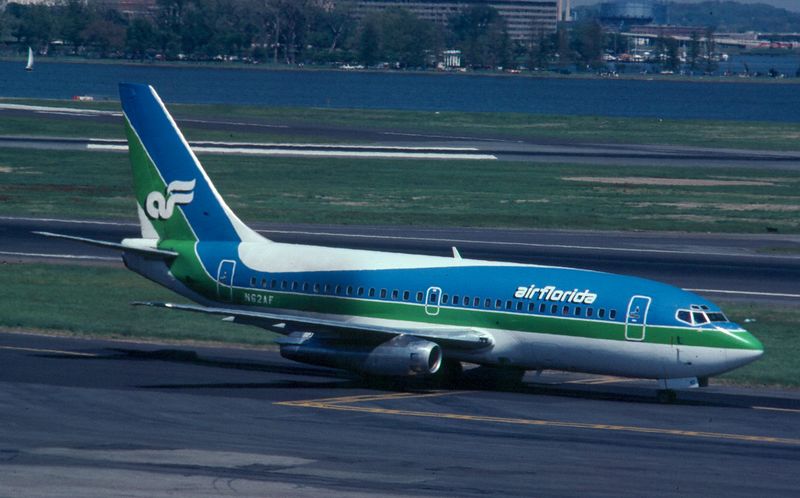
Aircraft registered N62AF
Aircraft registered N62AF. Photo: Original Photographer Unknown / Public domain, via Wikimedia Commons

A scheduled flight from Washington, DC to Fort Lauderdale, FL was delayed by snow removal, deiced without engine inlet plugs or pitot static covers, and used reverse thrust during pushback. After a 49-minute wait in snow, it took off with an engine instrument anomaly, stalled, struck a bridge and vehicles, and crashed into a frozen river.

Background

A scheduled flight from Washington, DC to Fort Lauderdale, FL was delayed for over one hour during moderate to heavy snowfall while the runway was closed for snow removal. The aircraft was deiced with a heated ethylene glycol and water solution; engine inlet plugs or pitot static covers were not installed.

Pre-takeoff Events

Contrary to procedures, reverse thrust was used to assist a tug during pushback from the gate, blowing snow. After pushback, the flight was delayed an additional 49 minutes while snow continued in subfreezing conditions. During the wait, the aircraft was positioned near the exhaust of the aircraft ahead.

Takeoff and Accident

During takeoff, the engine pressure ratios (EPRs) were set for 2.04, but an anomaly was noted in engine instrument readings. The captain elected to continue the takeoff. The aircraft lifted off approximately 2,000 feet and 15 seconds past the normal takeoff point. After liftoff, it initially climbed but failed to accelerate. The stall warning stickshaker activated shortly after takeoff and continued until the aircraft settled, struck a bridge and several vehicles, then plunged into a frozen river.

Investigation Findings

Investigation revealed engine inlet pressure probes became blocked with ice, resulting in erroneous EPR indications. Additionally, there was a possible pitchup due to snow/ice frozen on the wings. No runway distance markers were available, and the crew had limited cold weather operational experience.

Probable cause

Engine inlet pressure probes blocked with ice, resulting in erroneous EPR indications; possibility of pitchup due to snow/ice frozen on wings; lack of runway distance markers; crew limited cold weather operational experience.

Investigation report by the U.S. National Transportation Safety Board (NTSB) historical archive. Original record: https://carol.ntsb.gov/event/20020917X01907. This page is a structured re-presentation; facts and quotes are in the National Transportation Safety Board (NTSB), United States.