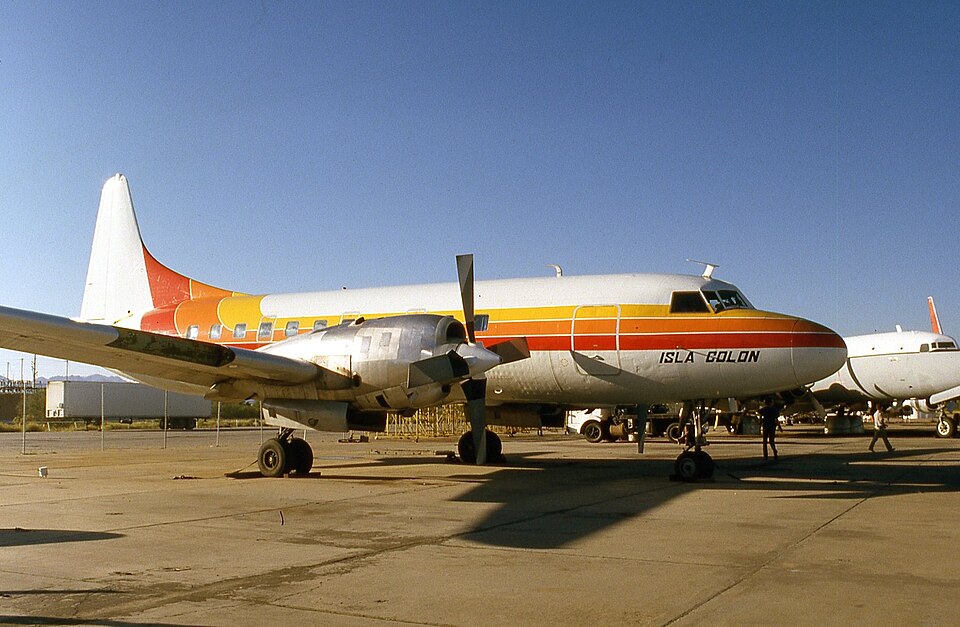
Landing Gear Strike on Snowbank Causes Fatal Cabin Penetration

Casualties unknown • Brainerd, MN, US

A propeller blade detached after striking a snowbank during an off-center landing, fatally injuring one passenger and seriously injuring another due to inadequate runway maintenance.

What happened

During the arrival phase of flight, the aircraft touched down approximately 1725 feet beyond the runway threshold. The touchdown occurred with the right wing lowered and the right main gear positioned about 37 feet from the right edge of the runway. Following initial contact, the aircraft continued to drift to the right. The right propeller struck a snowbank standing between two and three feet high, which was located between the runway edge and the runway edge lights.

The impact caused the number one blade to separate from the propeller assembly. This detached component entered the cabin, resulting in 1 fatal injury to a passenger and seriously injuring another individual.

The investigation

An examination of the scene revealed that runway plowing activities conducted two days prior to the accident had left snowbanks at the edge of the runway, specifically inside the runway edge lights. These obstructions had not been removed in accordance with 14 CFR 139.85 and the Airport Operations Manual. There was no Notice to Airmen (NOTAM) issued regarding the presence of these snowbanks.

Additionally, the company station manager failed to notify the aircrew about the location of the obstructions. The flight crew was unaware that dimming the intensity of the approach lights by activating the microphone switch also caused the runway edge lights to dim. The captain believed he lost some peripheral visual cues after touchdown.

Findings

The investigation identified several contributing factors. Fuel exhaustion is not cited; rather, the primary issues were environmental and procedural. The failure to remove snowbanks violated federal regulations and airport operational manuals. The lack of a NOTAM deprived the crew of critical situational awareness regarding runway conditions. Furthermore, the interaction between approach light intensity controls and runway edge lighting reduced visibility cues for the pilot during the critical touchdown phase.

Safety message

Airport operators must ensure that snow removal complies with 14 CFR 139.85 to prevent obstructions within protected areas. Clear communication via NOTAMs is essential when runway conditions deviate from standard configurations. Pilots should be aware of lighting system interdependencies that may affect peripheral vision during low-visibility operations.

Probable cause

The pilot's failure to maintain directional control during landing, compounded by the airline's failure to remove snowbanks in compliance with regulations and the lack of a NOTAM warning of the obstruction.

Frequently asked questions

What happened in the 1983-01-10 Convair 580-11-A accident near Brainerd, MN?

A propeller blade detached after striking a snowbank during an off-center landing, fatally injuring one passenger and seriously injuring another due to inadequate runway maintenance.

What aircraft was involved and where did it happen?

The accident on 1983-01-10 involved a Convair 580-11-A, registration N8444H, operated by Republic Airlines, Inc., at Brainerd, MN.

What was the probable cause of the accident?

The pilot's failure to maintain directional control during landing, compounded by the airline's failure to remove snowbanks in compliance with regulations and the lack of a NOTAM warning of the obstruction.

Investigation report by the U.S. National Transportation Safety Board (NTSB) historical archive. Original record: https://carol.ntsb.gov/event/20001214X41967. This page is a structured re-presentation; facts and quotes are in the National Transportation Safety Board (NTSB), United States.

Loading the flight search…