Casualties unknown

Turbine Blade Failure Causes Engine Shutdown During Climb (N7351F)

Madison, WI, US

On August 29, 1984, a Boeing 737-291 (registration N7351F) was involved in an aviation accident near Madison, WI. Investigators recorded the probable cause as: The failure of a first-stage turbine blade in the left engine, which was ingested into the remainder of the turbine. This summary draws on records from the U.S. National Transportation Safety Board (NTSB) historical archive; 2 related events involving the same aircraft type or operator are linked below.

Sourcesthe U.S. National Transportation Safety Board (NTSB) historical archivePrimary reportUpdated 2026-06-10Data APIEditorial standards
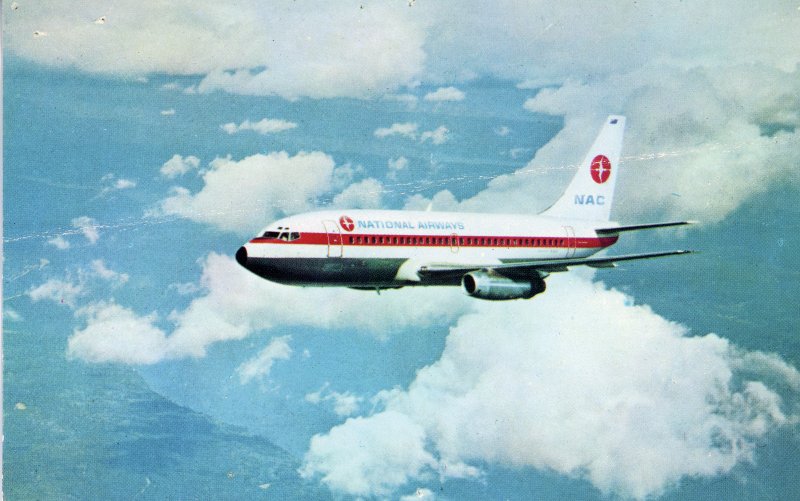
Boeing 737-291
Photo: San Diego Air & Space Museum Archives / Public domain, via Wikimedia Commons

A loud noise from the left engine prompted an immediate shutdown shortly after takeoff. The crew returned to the airport and executed a safe single-engine landing without further incident.

What happened

Shortly after lift-off, while climbing through approximately 150 feet above ground level (AGL), the flight crew experienced a loud noise originating from the left engine. This noise indicated an immediate failure of the left engine. The aircrew responded by securing the affected engine and initiating a return to the airport. They successfully completed a single-engine landing without any further complications or incidents.

The investigation

An examination of the failed left engine revealed that a first-stage turbine blade had fractured. The detached blade was subsequently ingested into the remainder of the turbine assembly, causing catastrophic internal damage and leading to the in-flight shutdown.

Findings

The primary factor contributing to the event was the mechanical failure of the first-stage turbine blade within the left engine. This component failure resulted in the ingestion of debris into the turbine section, which necessitated the immediate shutdown of the engine during the critical climb phase after takeoff.

Probable cause

The failure of a first-stage turbine blade in the left engine, which was ingested into the remainder of the turbine.

Investigation report by the U.S. National Transportation Safety Board (NTSB) historical archive. Original record: https://carol.ntsb.gov/event/20001214X40615. This page is a structured re-presentation; facts and quotes are in the National Transportation Safety Board (NTSB), United States.