Incident Overview
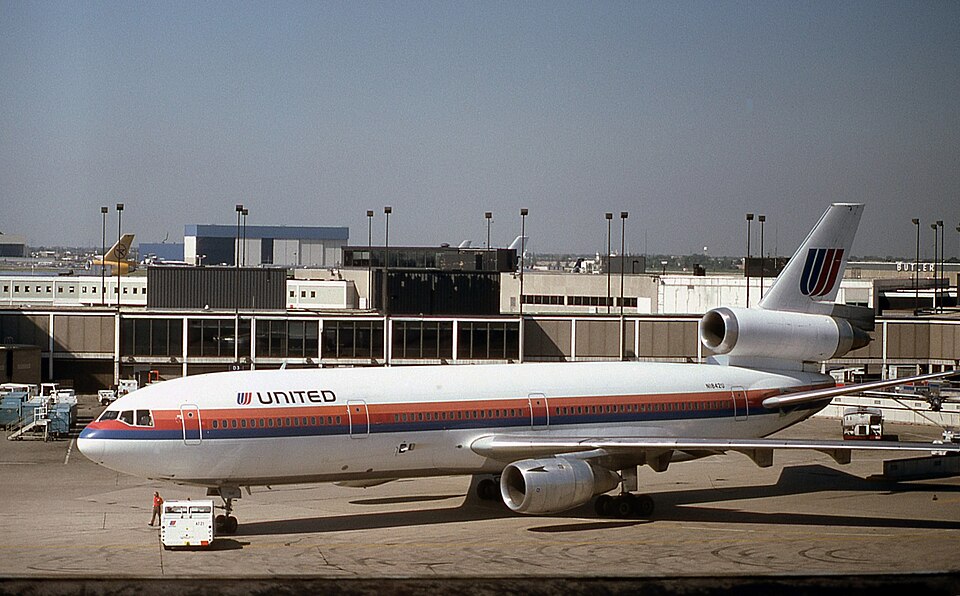
A ground incident occurred at an airport gate area involving Northwest Airlines Flight 78 (NW78), a Boeing 757, and United Airlines Flight 52 (UA52), a McDonnell Douglas DC-10. The collision resulted in minor damage to both aircraft and substantial damage to a mobile passenger lounge (MPL). The MPL driver sustained a minor injury.
Sequence of Events
NW78 was parked at Gate 17 facing east, with an MPL docked at its L1 door. UA52 taxied in an easterly direction past the left side of NW78, then turned right to a southeasterly heading to follow the lead-in line to Gate 15. The DC-10 was on the lead-in heading, with its nosewheel approximately 3 to 6 feet to the right of the line, and was following signals from a guideman. During this maneuver, the right wingtip of the DC-10 struck the aft end of the MPL. The impact caused the MPL driver, who was standing on the gangway, to fall backward into the 757, resulting in a minor injury.
Damage
The DC-10 and the 757 each sustained minor damage. The MPL was substantially damaged.
Background
United Airlines had recently begun using Gate 15 for DC-10 operations. At the time of the incident, Northwest Airlines was operating a DC-10 on Flight 78, which deplaned using the L2 door; however, one week before the incident, the DC-10 had been replaced with a 757 that normally deplaned through the L1 door. On the day of the incident, NW78 arrived late, and deplaning was still in progress when UA52 arrived at the gate. Measurements taken after the incident confirmed that insufficient clearance existed for a DC-10 at Gate 15 when the MPL was docked with a 757 at Gate 17.