Casualties unknown

1985-09-15: Boeing 747-130 (N780T) — Transamerica Airlines — Jamaica, NY

Jamaica, NY, US

On September 15, 1985, a Boeing 747-130 (registration N780T) operated by Transamerica Airlines was involved in an aviation accident near Jamaica, NY. Investigators recorded the probable cause as: The pilot's failure to maintain adequate airspeed or proper pitch attitude during the landing flare, resulting in the aft fuselage contacting the runway surface. This summary draws on records from the U.S. National Transportation Safety Board (NTSB) historical archive; 9 related events involving the same aircraft type or operator are linked below.

Sourcesthe U.S. National Transportation Safety Board (NTSB) historical archivePrimary reportUpdated 1781061362Data APIEditorial standards
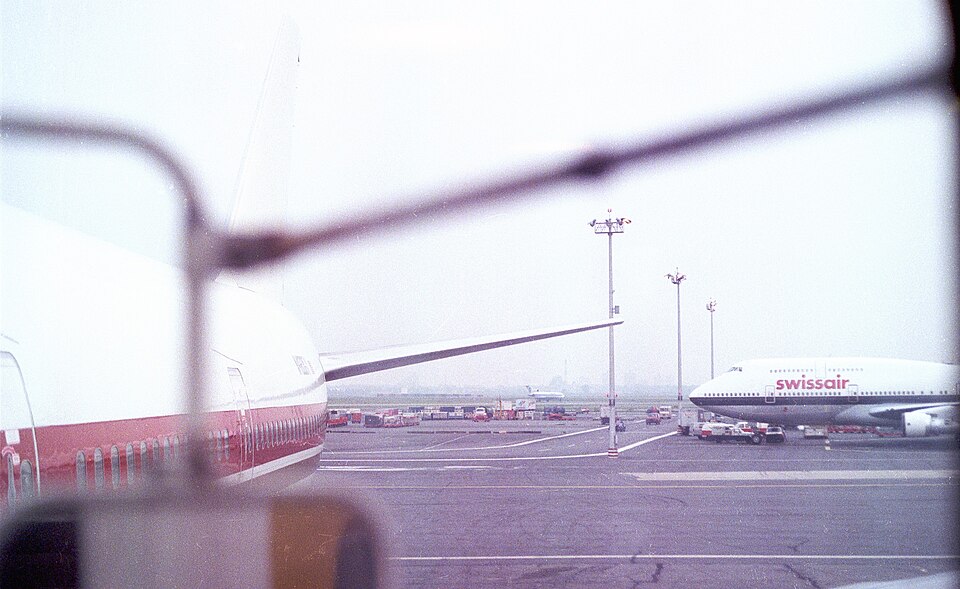
Aircraft registered N780T
Aircraft registered N780T. Photo: Andrew Thomas from Shrewsbury, UK / CC BY-SA 2.0, via Wikimedia Commons

An aircraft sustained significant structural damage to its aft fuselage after the bottom of the rear section contacted the ground during a visual approach to runway 31R at Jamaica, New York.

What happened

The aircraft was conducting a visual approach to runway 31R at Jamaica, New York. During the final phase of the landing maneuver, the bottom of the aft 60 feet of the fuselage made contact with the ground. This impact initiated structural damage that began at station 2080 and extended past station 2742 toward the gear.

The investigation

Examination of the airframe revealed specific mechanical failures resulting from the ground contact. The left outflow valve was scraped, and the rear drain mast was separated from its mounting. Additionally, part of the aft pressure access door sustained damage, along with several structural stringers and formers in the affected region. Internal damage within the pressurized cabin area is currently being evaluated by maintenance personnel.

Findings

The primary event was a tail strike during the landing rollout or flare phase. The extent of the damage indicates a significant vertical displacement between the aircraft's fuselage and the runway surface at the point of impact. The separation of the drain mast and scraping of the outflow valve are consistent with the described geometry of the aft fuselage contacting the pavement.

N00000 sustained substantial damage to the aft fuselage structure. The incident occurred during a visual approach phase of flight.

Probable cause

The pilot's failure to maintain adequate airspeed or proper pitch attitude during the landing flare, resulting in the aft fuselage contacting the runway surface.

Investigation report by the U.S. National Transportation Safety Board (NTSB) historical archive. Original record: https://carol.ntsb.gov/event/20001214X37884. This page is a structured re-presentation; facts and quotes are in the National Transportation Safety Board (NTSB), United States.