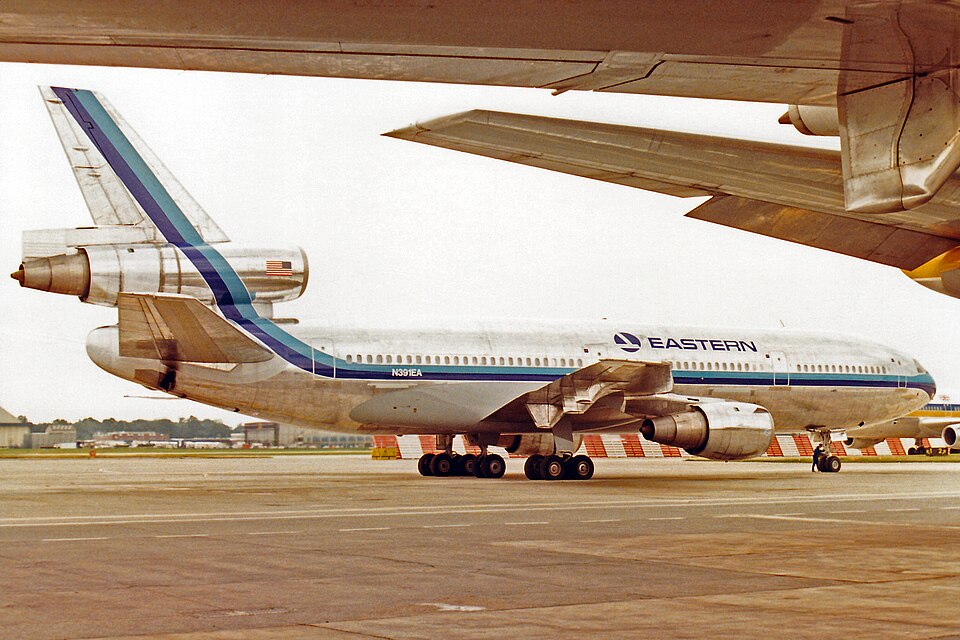
Incident Overview
EAL Flight 23, operating a flight from Los Angeles International Airport (LAX) to Miami, experienced a rapid decompression during its descent into Miami. The aircraft was carrying 3 flight crew members, 8 flight attendants, and 210 passengers.
Pressurization System Malfunction
During the initial climb after departure, the second officer (S/O) observed that the manual outflow valve control wheel did not move toward the half-closed position as it should have. The pressurization system was being operated in semi-automatic mode. The S/O attempted to use the standby system, then switched to manual control. He noted that the manual control wheel was hard to move.
The S/O was able to use manual control to reach cruising altitude, after which he tried the standby system, which successfully held the cabin altitude. However, upon commencing the descent to Miami, the manual control wheel moved rapidly to the open position. The S/O was unable to close the outflow valve using the manual system, as the wheel would not move.
Emergency Descent and Landing
In response, the crew donned oxygen masks and executed an emergency descent to 10,000 feet at a rate of 5,500 feet per minute. The aircraft was landed with the outflow valve fully open.
Injuries and Incidents
One flight attendant suffered a ruptured eardrum during the rapid decompression. Additionally, an oxygen generator canister caused smoke in the cabin.
Key Facts
- The pressurization system was in semi-auto mode during the event.
- The standby system was able to maintain cabin altitude at cruise.
- The manual outflow valve control wheel became immovable during descent.
- Emergency descent was executed at 5,500 fpm.
- The aircraft landed with the outflow valve fully open.