Casualties unknown

1989-09-05: Boeing 767-231 (N608TW) — Trans World Airlines Inc. — Knox, IN

Knox, IN, US

On September 5, 1989, a Boeing 767-231 (registration N608TW) operated by Trans World Airlines Inc. was involved in an aviation accident near Knox, IN. Investigators recorded the probable cause as: THE RADAR CONTROLLLER'S FAILURE TO MAINTAIN RADAR SEPARATION. FACTORS CONTRIBUTING TO THE INCIDENT WERE: MISUNDERSTANDING OF AN ATC INSTRUCTION BY THE PILOT OF THE INCIDENT AIRPLANE, AND UNCLEAR PHRASEOLOGY USED IN THE INSTRUCTIONS ISSUED BY THE RADAR… This summary draws on records from the U.S. National Transportation Safety Board (NTSB) historical archive; 6 related events involving the same aircraft type or operator are linked below.

Sourcesthe U.S. National Transportation Safety Board (NTSB) historical archivePrimary reportUpdated 1781061362Data APIEditorial standards
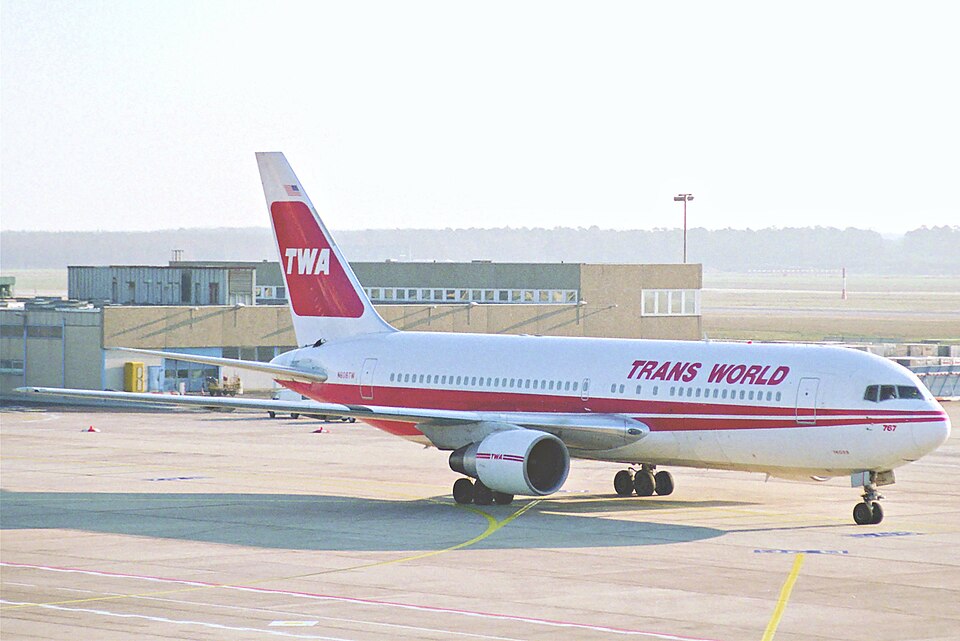
Aircraft registered N608TW
Aircraft registered N608TW. Photo: Aero Icarus from Zürich, Switzerland / CC BY-SA 2.0, via Wikimedia Commons

Aircraft responded to turn instruction intended for another with similar call sign, leading to intersecting courses. Both took evasive action. Closest approach vertical separation was between 95 and 200 ft.

Incident Overview

A near collision occurred between two airplanes operating in positive control airspace. The incident airplane had acknowledged and responded to a turn instruction that was issued to a third airplane with a similar call sign. As a result, the incident airplane turned to a heading that placed it and another airplane on an intersecting course.

Contributing Circumstances

The turn instruction was challenged by the airplane for which it was intended, but the incident airplane was not subsequently turned back to its original heading. The error was discovered shortly thereafter by the manual controller, who brought it to the attention of the radar controller. The radar controller then issued turn and climb instructions to the incident airplane, along with a traffic advisory.

Environmental Conditions

Visibility was reported by both flight crews as being reduced due to the presence of cirrus clouds, with no visible horizon.

Evasive Actions and Separation

Both airplanes took evasive action. Correlation of the two digital flight data recorder (DFDR) readouts with radar track data indicated that, at the point of closest approach, vertical separation was between 95 and 200 feet.

Investigation report by the U.S. National Transportation Safety Board (NTSB) historical archive. Original record: https://carol.ntsb.gov/event/20001213X29317. This page is a structured re-presentation; facts and quotes are in the National Transportation Safety Board (NTSB), United States.