Casualties unknown

Runway Contact During ILS Approach Due to Localizer Chase (N404EA)

Tallahassee, FL, US

On December 8, 1989, a Mcdonnell Douglas DC-9-51 (registration N404EA) was involved in an aviation accident near Tallahassee, FL. Investigators recorded the probable cause as: The first officer's failure to establish the aircraft on the localizer centerline and chasing the needle, which led to an uncontrolled side-step maneuver and left wingtip impact with the runway upon touchdown. This summary draws on records from the U.S. National Transportation Safety Board (NTSB) historical archive.

Sourcesthe U.S. National Transportation Safety Board (NTSB) historical archivePrimary reportUpdated 2026-06-10Data APIEditorial standards
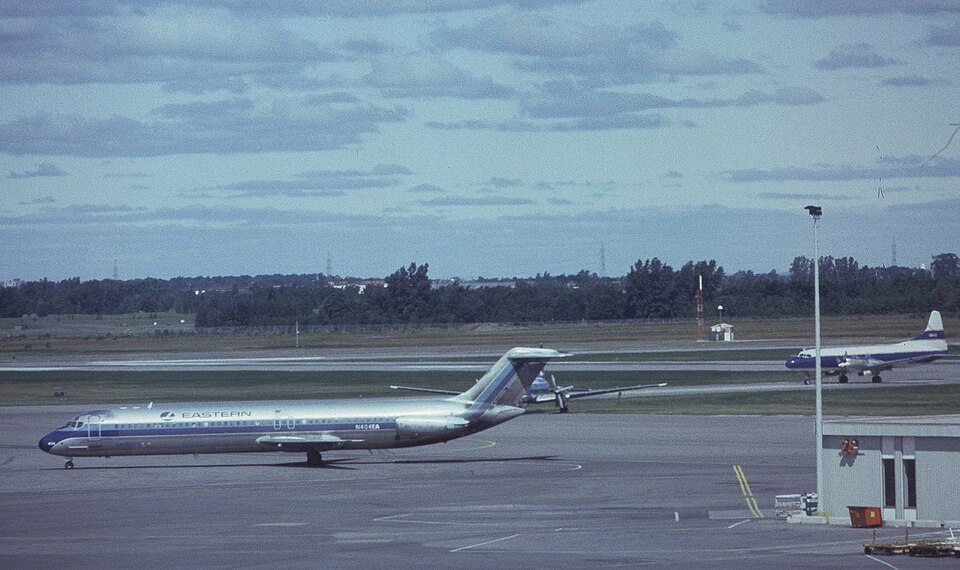
Aircraft registered N404EA
Aircraft registered N404EA. Photo: Andrew Thomas from Shrewsbury, UK / CC BY-SA 2.0, via Wikimedia Commons

During an instrument landing system approach, the first officer failed to center the aircraft and chased the localizer needle. The captain took control near the runway but touched down with a left bank, causing the wingtip to strike the pavement.

What happened

The flight crew was conducting an instrument landing system (ILS) approach. The first officer was acting as the pilot flying during this phase of the operation. Throughout the final approach segment, the aircraft was not established on the runway centerline. Instead of correcting the drift early and maintaining a steady course, the first officer allowed the aircraft to chase the localizer needle, resulting in erratic lateral control inputs.

As the aircraft descended to approximately 250 feet above ground level (AGL), the captain assumed control of the airplane. The intention was to execute a side-step maneuver to align with the runway for landing. However, due to the accumulated lateral displacement and the late correction, the aircraft touched down while still banked to the left.

The investigation

Post-accident examination confirmed that the impact originated from the left wingtip striking the runway surface. The damage was consistent with a hard contact during a non-level attitude at touchdown. No mechanical failures or malfunctions were identified that would have precluded normal operation of the aircraft systems.

Probable cause

The first officer's failure to establish the aircraft on the localizer centerline and chasing the needle, which led to an uncontrolled side-step maneuver and left wingtip impact with the runway upon touchdown.

Investigation report by the U.S. National Transportation Safety Board (NTSB) historical archive. Original record: https://carol.ntsb.gov/event/20001213X29991. This page is a structured re-presentation; facts and quotes are in the National Transportation Safety Board (NTSB), United States.