Casualties unknown

Jet Blast from Departing B-747 Causes SD3-60 to Lose Control and Hit Blast Fence (N381MQ)

Jamaica, NY, US

On May 11, 1990, a Short Brothers SD3-60-200 (registration N381MQ) operated by Command Airways was involved in an aviation accident near Jamaica, NY. Investigators recorded the probable cause as: PILOT FACTOR IN THAT THE PILOT TAXIED INTO A HOLD POSITION THAT WAS TOO CLOSE TO A DEPARTING B-747, WHICH RESULTED IN THE A/C BEING BLOWN INTO A BLAST FENCE. This summary draws on records from the U.S. National Transportation Safety Board (NTSB) historical archive; 2 related events involving the same aircraft type or operator are linked below.

Sourcesthe U.S. National Transportation Safety Board (NTSB) historical archivePrimary reportUpdated 2026-06-10Data APIEditorial standards
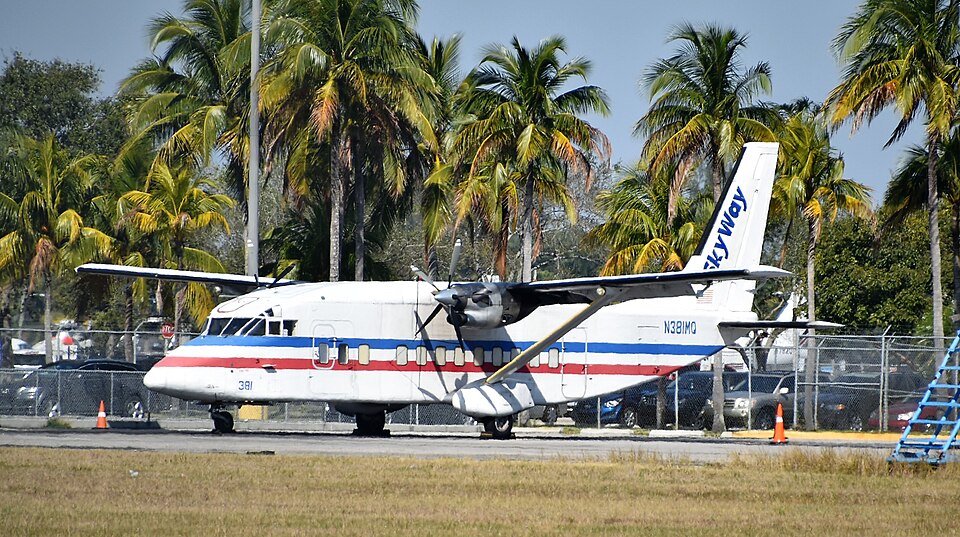
Aircraft registered N381MQ
Aircraft registered N381MQ. Photo: Alec Wilson from Khon Kaen, Thailand / CC BY-SA 2.0, via Wikimedia Commons

A Short SD3-60, cleared to taxi into position, lost control when taxiing forward of the hold line and was blown into a blast fence by the thrust of a departing Boeing 747-400.

Incident Description

Flight 335, a Short SD3-60, was cleared to taxi into position and hold behind a departing Boeing 747-400. As the SD3-60 taxied forward of the hold line, the pilot lost control of the airplane, and it was blown into a blast fence by the thrust of the departing aircraft.

Pilot Experience

The pilot-in-command (PIC) had 44 hours in type, with 10 hours as PIC, and had previously served as a first officer on an ATR-42. The second-in-command (SIC) had 49 hours in type and came from a general aviation background.

Manufacturer Information

The manufacturer, Short Brothers, was queried regarding the effect of high-velocity wind on the SD3-60. They stated that a wind of approximately 70 knots perpendicular to the fuselage could upset the airplane. This information was not available to the pilots in the flight manual or from the operator.

Company Policy

The company had a crew pairing policy that prohibited pairing two low-time crewmembers together. However, this policy was waived by the vice president of flight operations for the crew, as the flight was a positioning flight only.

Investigation report by the U.S. National Transportation Safety Board (NTSB) historical archive. Original record: https://carol.ntsb.gov/event/20001212X23254. This page is a structured re-presentation; facts and quotes are in the National Transportation Safety Board (NTSB), United States.